

Hydraulic Injection Molding Machine vs All-Electric Explained
A hydraulic injection molding machine generates clamping and injection force through press…
August 22 2026
 2026-06-16-15:02
 Choosing the wrong extrusion process can waste material, slow production, and delay your project. For buyers building plastic, packaging, pipe, film, or precision component lines, confusion often starts with process selection. The solution is to understand each extrusion type before choosing equipment.
The main types of extrusion processes include direct extrusion, indirect extrusion, hot extrusion, cold extrusion, warm extrusion, hydrostatic extrusion, impact extrusion, friction extrusion, plastic extrusion, and twin screw extrusion. Each extrusion process uses pressure to force raw material through a die, creating continuous or shaped products for different industries.
Extrusion is a manufacturing process where material is pushed through a shaped die to create a long product with a fixed cross-section. Think of squeezing toothpaste from a tube. The material enters from one side, moves under pressure, and comes out in a controlled shape.
In metal extrusion, the raw material is often a heated or cold billet. The billet is pressed through a die to form rods, tubes, profiles, or other shapes. In plastic extrusion, plastic pellets or flakes are melted by heat and screw movement, then pushed through a die to make film, pipe, sheet, profile, coating, or granules.
Extrusion is used because it can create long, consistent products with high repeatability. It is common in packaging, construction, automotive, electronics, medical products, pipe production, food processing, and industrial parts.
For our B2B customers, extrusion is not just a theory. It is part of real factory output. A stable extrusion line can support film blowing, pipe extrusion, sheet extrusion, profile extrusion, recycling pelletizing, and material compounding.
Understanding the extrusion process helps buyers choose the right machine, screw design, die, auxiliary equipment, and after-sales plan. A wrong choice may cause unstable output, poor product thickness, weak surface quality, high energy use, or long downtime.
Many buyers ask for a quick quote first. That is normal. But before we quote, we usually ask about raw material, product size, output target, cooling method, power supply, workshop layout, and final application. These details affect the extrusion equipment and line configuration.
For example, a thin-wall food packaging film producer may need stable melt flow and fast cooling. A medical packaging project may need cleaner material handling and better process records. An industrial precision component factory may care more about dimensional stability and product quality.
This is why we see extrusion as a complete system, not a single machine. The extruder, screw and barrel, die head, temperature control, cooling, haul-off, cutting, winding, pelletizing, and PLC control must work together.
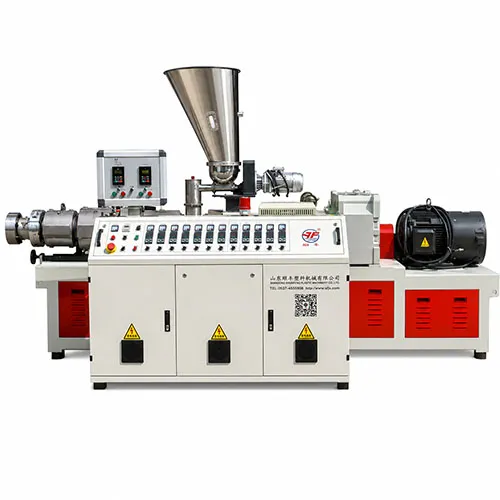
The main types of extrusion processes can be grouped by material flow direction, working temperature, pressure method, and material type. In engineering books, the common type of extrusion includes direct extrusion, indirect extrusion, hydrostatic extrusion, impact extrusion, hot extrusion, cold extrusion, warm extrusion, and friction extrusion.
In modern production, buyers also care about plastic extrusion and twin screw extrusion. These processes are widely used in packaging, pipe, film, sheet, profile, compounding, recycling, and masterbatch production.
Direct extrusion is also known as forward extrusion. In this extrusion method, the billet is pushed by a ram and flows through the die in the same direction as the ram movement. It is one of the most common conventional extrusion methods in metal forming.
Direct extrusion is widely used for metal extrusion products such as rods, bars, pipes, profiles, and structural shapes. During the process, the billet touches the container wall, so friction is created between the billet and the container. This friction increases the required force.
The advantage of direct extrusion is simple structure and wide application. The disadvantage is higher friction and higher power demand compared with some other methods. In aluminum extrusion, direct extrusion is common because aluminum can be extruded into many useful shapes for doors, windows, frames, and industrial parts.
For plastic machinery buyers, the idea is similar: material must move smoothly through the barrel and die. Even though plastic extrusion does not use a metal billet in the same way, flow resistance, die design, and pressure control still matter.
Indirect extrusion is also known as backward extrusion. In this extrusion process, the die moves toward the billet, and the material flows in the opposite direction of the ram movement. Because the billet does not slide as much against the container wall, friction can be lower than direct extrusion.
Lower friction can reduce the required extrusion force. This can improve efficiency and support better control in some metal extrusion applications. Indirect extrusion is often used for tubes, hollow parts, and special profiles.
The main challenge is equipment complexity. The tool structure is more difficult, and the process may need better alignment and control. That is why buyers must evaluate production volume, product size, material, and cost before selecting this method.
In real production planning, this lesson is useful for plastic lines too. Sometimes a more complex machine or die costs more at first, but it can reduce waste, improve stability, and support long-term output.
Hot extrusion means the billet is heated before forming. It is a hot working process used when the metal needs lower forming force and better flow. Hot extrusion is common for aluminum, copper alloys, magnesium, and other metals that are easier to shape when heated.
Cold extrusion happens near room temperature. It can produce strong parts with good surface finish and tighter dimensional control. Cold extrusion is often used for small metal components, fasteners, shafts, and precision parts. The challenge is higher forming force because the material is not softened by heat.
Warm extrusion sits between hot extrusion and cold extrusion. It uses moderate heat to improve material flow while keeping better accuracy than full hot forming. Cold and hot extrusion each has its place, and warm extrusion is often a balanced choice.
For plastic extrusion, temperature control is also critical. Plastic must melt evenly, but it must not overheat. If temperature is too low, the material may not flow well. If it is too high, resin may degrade, change color, or lose strength.
Hydrostatic extrusion uses pressurized fluid around the billet. This reduces direct contact and friction between the billet and container. The hydrostatic extrusion process is useful for difficult-to-form materials because fluid pressure helps support the billet during forming.
Impact extrusion uses a high-speed punch to force material into shape. It is often used for small metal containers, tubes, and parts with thin walls. The process is fast and efficient when product size and material are suitable.
Friction extrusion is different. It uses friction heat and severe plastic deformation to shape or consolidate material. In some research and advanced manufacturing, friction extrusion can help turn metal chips, powders, or recyclable feedstock into useful rods, wires, or profiles.
Friction matters in all extrusion techniques. Sometimes friction is a problem because it increases force and heat. Sometimes friction becomes part of the process, as in friction extrusion. For buyers, the key is simple: the process must control heat, pressure, flow, and final shape.
Lateral extrusion is another special method where material flows sideways. It is less common in standard buying discussions, but it shows how flexible extrusion technology can be when product design needs a special flow path.
Metal extrusion is usually a metal forming process. It shapes a billet through pressure. Plastic extrusion melts plastic resin, flakes, or pellets and uses a rotating screw to push the melt through a die. Both processes extrude material, but the equipment and control points are different.
In plastic extrusion, the process involves feeding, melting, mixing, pressurizing, filtering, die forming, cooling, pulling, cutting, winding, or pelletizing. The extrusion process takes place continuously in many production lines. This continuous process is why plastic extrusion is used for high-volume products.
Plastic extrusion can create many products:
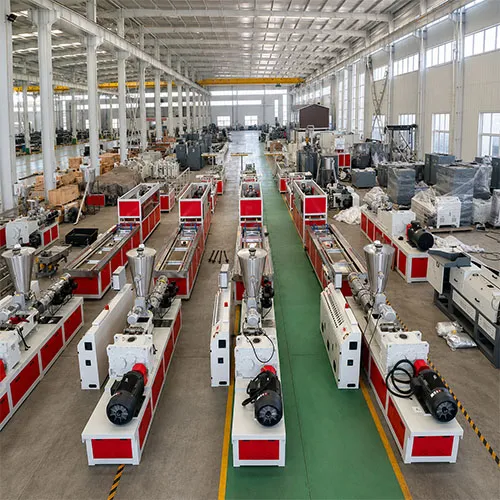
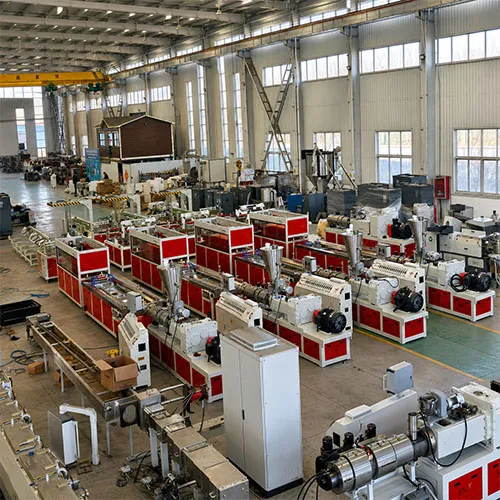
For our customers, plastic extrusion is often linked with film blowing, recycling, pelletizing, pipe extrusion, and extrusion coating. A complete line may include extruder, die head, air ring, cooling tank, haul-off, winder, cutter, screen changer, dryer, loader, and control cabinet.
Twin screw extrusion uses two screws inside the barrel. The screws may rotate in the same direction or opposite directions. Compared with single screw extrusion, twin screw extrusion can offer better mixing, feeding, compounding, devolatilization, and material control.
Twin screw extrusion is widely used for PVC pipe, PVC profile, masterbatch, filler compounding, engineering plastics, recycling, and modified materials. It is also useful when the material needs strong mixing or when additives must be dispersed evenly.
The screw design, barrel design, motor power, gearbox, temperature zones, side feeder, vacuum venting, screen changer, and die must match the material. A poor match can cause unstable output, poor mixing, overheating, or low product quality.
For B2B buyers, twin screw extrusion is not only about “two screws.” It is about process design. What material will you run? What filler content? What output per hour? Do you need vacuum venting? Do you need underwater pelletizing or strand pelletizing? These questions decide the real equipment solution.
Choosing extrusion equipment should start with the final product, not the machine name. Buyers should tell the supplier what they want to make, what material they use, what output they need, and what quality standard they must meet.
For plastic extrusion lines, important selection points include:
As a factory-direct, engineering-driven supplier, HEE&HATO provide one-stop plastic machinery solutions for global B2B customers. HEE&HATO service covers injection molding, extrusion, film blowing, equipment selection, process support, turnkey delivery, export documentation, international logistics, and full lifecycle service.
This is important for mid- to large-scale plastic processing factories, packaging manufacturers, medical consumables producers, EPC contractors, system integrators, and regional distributors. These buyers do not only need a machine. They need stable mass production, clear lead time, fast quoting, compliant delivery, remote support, spare parts, and room for future expansion.
Extrusion is a powerful and flexible manufacturing process. It can shape metal, process plastic, make film, form pipe, create profiles, and support recycling. But no single type of extrusion is best for every factory.
Hot extrusion, cold extrusion, direct extrusion, indirect extrusion, hydrostatic extrusion, friction extrusion, plastic extrusion, and twin screw extrusion all serve different needs. Buyers should focus on material, product shape, output, quality, energy use, maintenance, and long-term growth.
If you are planning a plastic extrusion project, send us your product type, raw material, target output, size requirement, workshop layout, and delivery schedule. We can help you evaluate the right extrusion process, recommend suitable equipment, prepare a fast quote, and support your project from FAT to stable production.
Extrusion is a process where material is pushed through a shaped die to make a long product with the same cross-section. It is used for metal rods, aluminum profiles, plastic film, pipe, sheet, and many other products.
The main types include direct extrusion, indirect extrusion, hot extrusion, cold extrusion, warm extrusion, hydrostatic extrusion, impact extrusion, friction extrusion, plastic extrusion, and twin screw extrusion.
Hot extrusion uses a heated billet, so the material flows more easily. Cold extrusion takes place near room temperature and can give better accuracy and surface finish, but it needs higher forming force.
No. Metal extrusion shapes a metal billet through pressure. Plastic extrusion melts plastic resin and pushes it through a die using a rotating screw. Both are extrusion processes, but the equipment and control methods are different.
Buyers should consider twin screw extrusion when they need strong mixing, compounding, PVC processing, filler addition, recycling, masterbatch production, or better material control.
Buyers should provide product type, raw material, target output, product size, tolerance, factory layout, power supply, automation needs, delivery timeline, and service requirements.
A strong supplier can provide equipment selection, screw and barrel design, die matching, auxiliary equipment, FAT, export documentation, installation, commissioning, training, spare parts, remote support, and maintenance programs.

A hydraulic injection molding machine generates clamping and injection force through press…

Set injection moulding process parameters in a fixed order: barrel and mould temperature, …
We will reply you within 24 hours. If for urgent case, please add WhatsApp/WeChat: +86 15653430206,. Or call +86 15653430206 directly.
*We respect your confidentiality and all information are protected.
We will only use your information to respond to your inquiry and will never send unsolicited emails or promotional messages.