

شرح الفرق بين آلة القولبة بالحقن الهيدروليكية وآلة القولبة بالحقن الكهربائية بالكامل
تولد آلة القولبة بالحقن الهيدروليكية قوة التثبيت وقوة الحقن من خلال الضغط…
22 أغسطس 2026
 2026-03-27-11:42
 Poor pellet quality can slow down a whole factory. Irregular size, unstable output, and hard-to-control cooling lead to waste, downtime, and customer complaints. A well-matched water ring pelletizer solves that by improving cutting stability, pellet shape, and line efficiency.
إن جهاز التكوير الحلقي المائي هو حل تكوير يقطع المواد المنصهرة في وجه القالب ويستخدم الماء الدائر لتبريد ونقل تيار الكريات بعيدًا عن القاطع. في العديد من التطبيقات البلاستيكية، خاصةً البولي بروبيلين والبولي بروبيلين الصفائح وإعادة معالجة الأغشية والمركبات، يوفر نظام التكوير الحلقي المائي تشغيلًا فعالاً وتشكيل كريات نظيفًا وإنتاجًا موثوقًا لإنتاج كميات مستقرة.
In real factory work, the value of a water ring pelletizer is simple: it helps turn unstable melt flow into saleable plastic pellets with fewer handling problems. For processors making packaging materials, medical-supporting materials, or industrial compounds, stable pellet shape matters because it directly affects feeding, storage, dosing, and later molding or extrusion.
We often explain it this way to buyers: your downstream process only runs as well as your pellet quality. A poor pelletizing result can create dust, tails, fusion, and feeding inconsistency. A properly engineered water ring pelletizer supports stable operation, shorter changeover time, and more predictable product quality. That is why many factories upgrading a production line now look beyond simple cutting and focus on the full pelletizing system.
As a factory-direct, engineering-driven supplier, we see global B2B customers asking not just for a machine, but for a workable line package: equipment sizing, layout, commissioning, training, spare parts planning, and future expansion support.
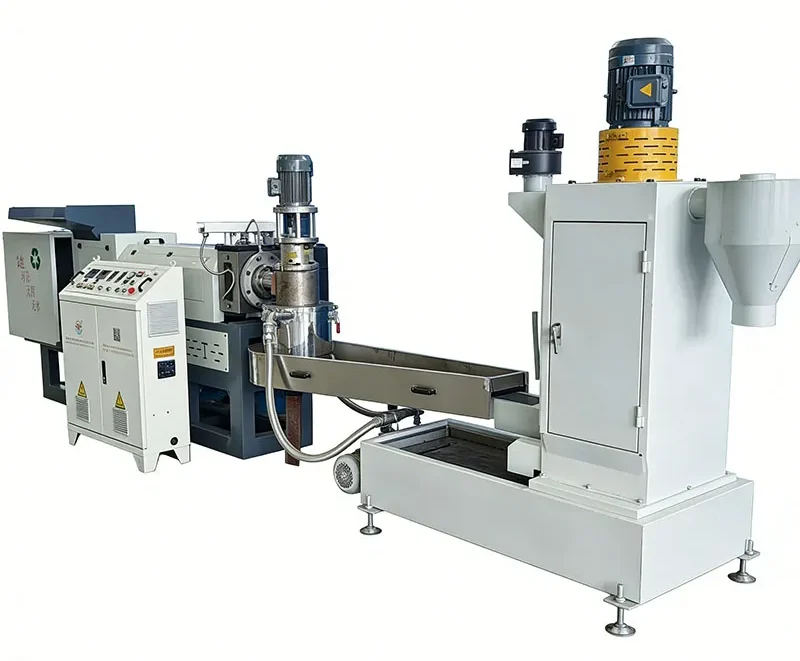
A water ring pelletizing system starts with an extruder or twin-screw extruder that pushes the melt through a die plate. As the material exits the hot die, a rotating die face cutter cuts the material immediately. Water flows around the cutting chamber, forming a cooling ring that helps carry the cut particles away.
This process is known as die-face pelletizing. Unlike traditional strand handling, the material does not need long open-air cooling before cutting. Instead, the cutting process happens at the die, which helps save space and improve handling for many soft or sticky thermoplastic materials.
After cutting, the pellets move through a water circulating system, then pass into a dewatering system. A centrifugal dryer removes moisture before the material reaches collection or packaging. In a well-designed setup, the operator can manage water temperature, flow stability, cutter pressure, and die conditions to maintain a more uniform pellet and dependable final output.
This is one of the most common questions from converters and recyclers. Water ring pelletizing cuts the material directly at the die and cools it with a moving water ring. Strand pelletizing cools long strands first, then cuts them later with a strand pelletizer. Both methods work, but they suit different materials and production targets.
A strand route can be simple and cost-effective for some rigid materials. However, soft, tacky, flexible, or thin-film-based materials may stretch, stick, or break before they reach the cutter. In those cases, a water-ring pelletizing setup is often easier to control.
That does not mean one system is always better. It means the correct method depends on your material, target throughput, plant layout, and required pellet quality. In many plastic recycling or compounding jobs, ring pelletizers bring more stable handling.
A جهاز تكوير حلقة الماء is widely used for pe plastic, PP, soft blends, film scrap reprocessing, and many compounded polymer applications. It is especially useful when the melt stays soft after exiting the die and does not behave well as a cooled strand.
Common examples include:
For thin-wall and food packaging manufacturers, a water ring pelletizing system can support efficient recovery and reuse of edge trim, startup waste, and off-spec materials. For industrial compounders, it can also support stable discharge from a compound process where output continuity matters.
For medical-related packaging or cleaner industrial applications, buyers often ask about material cleanliness, contamination control, and wash-down-friendly layout. In those projects, line design, stainless contact parts, water management, and easy maintenance become just as important as pellet cutting itself.
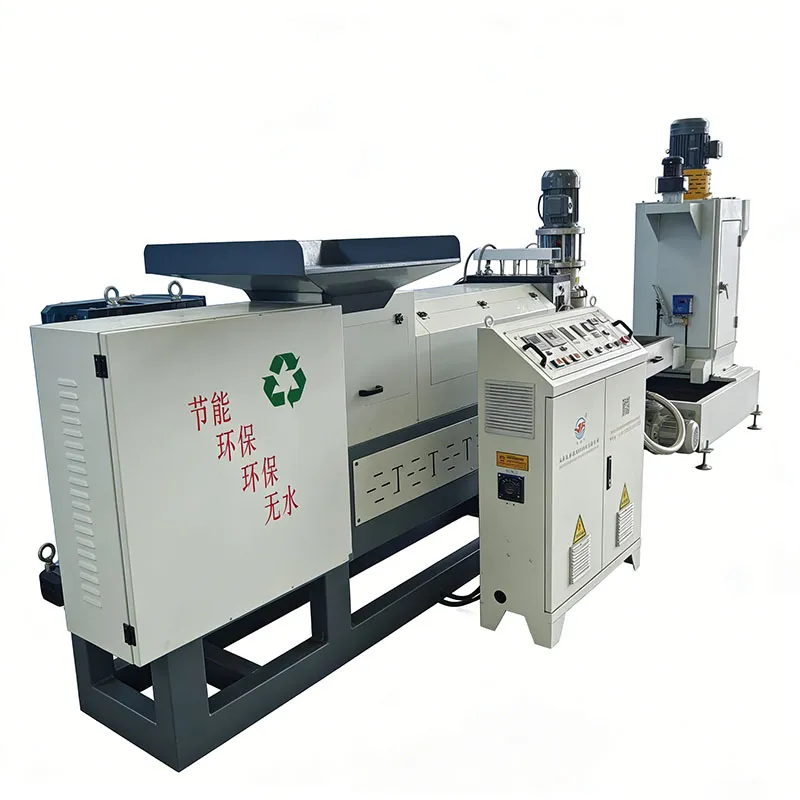
A lot of people think pellet quality depends only on knife speed. In fact, pellet quality comes from the whole system balance. The extrusion side, the die plate, the knife gap, the water temperature, and the drying stage all work together.
When we review projects with customers, we normally check these factors first:
If your goal is high throughput, you cannot ignore cooling and drying. Strong output with poor drying still creates handling issues. Good design aims for both rate and pellet quality. That is where engineering matters. A line should not only run fast. It should run steadily, and it should create a clean final pellet that performs well in storage and downstream feeding.
Not always. Underwater pelletizing is another well-known method, but it serves different process needs. In underwater systems, cutting also happens at the die, but the die and pellet transport work under a more enclosed water environment and usually involve more complex process control.
For many mid-range plastic applications, آلات تكوين الكريات بحلقة مائية offer a strong balance of cost, simplicity, serviceability, and output quality. That makes them attractive for processors that want dependable pelletizing without unnecessary complexity.
A simple rule of thumb is this:
For many B2B buyers, especially those running packaging waste recovery or standard compounding jobs, the winning answer is not the most advanced system on paper. It is the system that matches the plant’s real process, budget, and service capability.
A modern water ring pelletizing system should not only solve today’s output challenge. It should also fit tomorrow’s expansion plan. Many customers start with one production line and later add capacity, material variations, or upgraded automation.
This matters in recycling solutions because feedstock quality can change over time. A system with flexible controls, accessible maintenance points, and scalable design can support plant upgrades with less disruption.
In practical terms, a future-ready system may include:
For factories handling internal scrap or post-industrial waste, this means a more reliable recycling process and more reusable pellets for sale or reuse. For regional distributors and EPC contractors, it means easier project planning and stronger lifecycle value for end users.
A جهاز تكوير حلقة الماء is used to convert molten material into small pellets by cutting it at the die and cooling it with circulating water. It is widely used for soft plastic, film scrap recovery, compounding, and flexible material processing.
Yes. It is commonly used for pe, PP, and pp pe materials, especially when the melt is soft and difficult to handle as cooled strands. It is also useful for flexible film-related applications.
Water ring pelletizing cuts material at the die face with water-assisted cooling. Strand pelletizing cools long strands first and cuts them later. Water ring systems are often better for softer materials and compact layouts.
Yes. Many recycling plants use it for film reprocessing, soft waste recovery, and reclaim applications where pellet consistency and easier handling are important.
The most important factors are melt stability, die design, knife condition, water flow, and drying performance. A good pelletizing system balances all of these, not just cutter speed.
Choose a supplier that offers engineering support, clear quotations, FAT, export documentation, commissioning help, spare parts, and long-term after-sales service. For B2B projects, support quality is as important as machine quality.
A water ring pelletizer is not just a cutting device. It is a practical process tool for stable pelletizing, better handling of soft plastic, and more dependable factory output. When matched correctly with the extruder, die design, water loop, and drying section, it can deliver cleaner pellets, lower downtime, and stronger production control.
For global B2B buyers in packaging, medical-supporting materials, and industrial components, the right water ring pelletizer system should do three things well: support stable mass production, fit your plant’s real process, and stay serviceable over the long term. That is exactly why engineering-driven selection, turnkey planning, and lifecycle support matter so much.

تولد آلة القولبة بالحقن الهيدروليكية قوة التثبيت وقوة الحقن من خلال الضغط…

اضبط معلمات عملية القولبة بالحقن بترتيب محدد: درجة حرارة الأسطوانة والقالب، …
سنرد عليك في غضون 24 ساعة. إذا كانت الحالة عاجلة، يُرجى إضافة واتساب/وي شات: +86 15653430206,. أو اتصل على +86 15653430206 مباشرة.
*نحن نحترم سريتك وجميع معلوماتك محمية.
لن نستخدم معلوماتك إلا للرد على استفسارك ولن نرسل أبداً رسائل بريد إلكتروني غير مرغوب فيها أو رسائل ترويجية.