




Injection Molding Machine Guide: How a Plastic Molding Machine Manufacturer Improves the Injection Molding Process
An injection molding machine improves output when it matches the resin, mold, cycle target…
March 17 2026
 2026-03-16-11:10
 Many film plants struggle with unstable output, uneven film thickness, slow changeovers, and delivery pressure from customers. A better blown film setup solves that. The right 3 layer system gives you stronger film, lower waste, and a more reliable path to scale.
A 3 layer co-extrusion blown film machine combines multiple material layers in one extrusion process so manufacturers can improve strength, sealing, cost control, and application flexibility. For B2B processors making packaging, medical, and industrial films, it is often the most practical step between basic mono-layer output and higher-cost 5 layers or specialty barrier structures.
A 3 layer co-extrusion blown film machine is a film machine that uses three melt streams to form one tubular film bubble. In simple terms, three extruders or a matched layer co extrusion setup feed a shared die head, and each layer is assigned a job. One layer may improve sealing, another may improve stiffness, and another may help printing or cost control.
That is why a co-extrusion blown film machine is so useful in real production. Instead of making one material do everything, you design the film structure on purpose. In our experience, that gives processors more freedom in food packaging, daily packaging, industrial liners, courier bags, and general plastic film applications where strength, appearance, and cost all matter.
For many factories, a three layer setup is the sweet spot. It offers a real step up from mono-layer output without the capital load of more advanced multilayer co-extrusion blown film line projects. It is also a practical bridge for plants that plan to move later into higher-barrier packaging and more advanced film lines. Coextruded structures are widely used because precise layer distribution helps control performance and material cost.
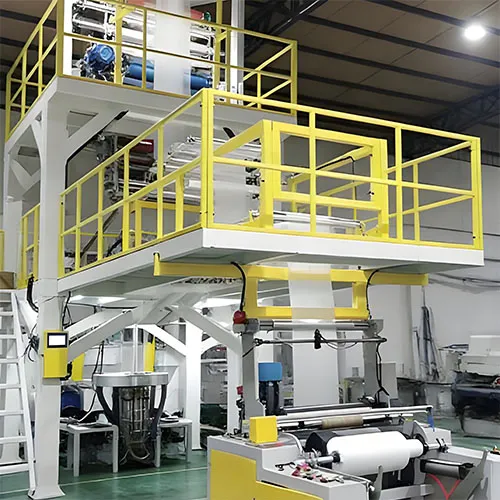
Single-layer blown film still works for many basic bags and liners. But once customers ask for better puncture strength, more stable sealing, or tighter performance targets, mono-layer production starts to show its limits. That is where co-extrusion becomes valuable.
With co-extrusion blown film, the outer and inner layers can be tuned separately. A processor can improve seal behavior, printability, stiffness, or downgauging potential without forcing one polymer to do every job. This is one reason many converters move to 3-layer co-extrusion first. It is a cost-conscious way to produce films with exceptional strength while still managing resin use carefully.
There is also a cost argument. Industry guidance from major extrusion equipment suppliers notes that uniform layers help manufacturers use expensive materials more efficiently in coextruded structures. In plain language, you place better resin where it creates value and avoid overusing it where it does not. That matters a lot in high-volume film production.
A modern blown film extrusion line looks simple from a distance, but stable production depends on many linked stages. Resin enters the extruder, melts through the barrel and screw, and moves through the die head. Air inflates the melt into a bubble, cooling begins, the bubble is stabilized, collapsed, and then wound into finished rolls.
The quality of this extrusion process depends on temperature control, screw design, cooling balance, bubble stability, and haul-off consistency. A strong screw extruder setup helps deliver even melt flow. A good air ring helps cool and stabilize the bubble. A sound tower and winding section help the film stay flat and uniform. Small errors in one area often become large problems at the roll.
For B2B buyers, this is why the machine itself is only part of the solution. A factory-direct, engineering-driven supplier should also support process setup, operator training, trial runs, and later optimization. In our projects, the best results come when the production process is planned as a system, not just as a standalone making machine purchase. Cooling and bubble-control technologies such as air rings and IBC internal cooling are used because they improve stability, cooling efficiency, and productivity in the blown film line.
Most 3 layer blown film extrusion projects center on LDPE, HDPE, LLDPE, or blended PE structures. The right answer depends on what the film must do. HDPE is often chosen when stiffness and light weight matter. LDPE or LLDPE are common when toughness, sealability, or flexibility matter more.
A practical 3-layer structure lets processors build a better balance. For example, the outer layer may be tuned for printing and handling, the middle layer for cost or stiffness, and the inner layer for sealing. In some cost-sensitive products, ABA blown film structures allow recycled or lower-cost resin in the core while keeping better performance skins on the outside.
That said, material selection should always follow the real application. A bag line, shrink film line, mulch film product, courier mailer, industrial packing film, or medical packaging film will not use the same recipe. And if your end market includes regulated food packaging, the resin and additive package must align with the intended conditions of use and food-contact rules in the destination market. FDA guidance makes clear that food-contact substances must be authorized for their intended use, and the U.S. maintains public inventories and notification pathways for such materials.
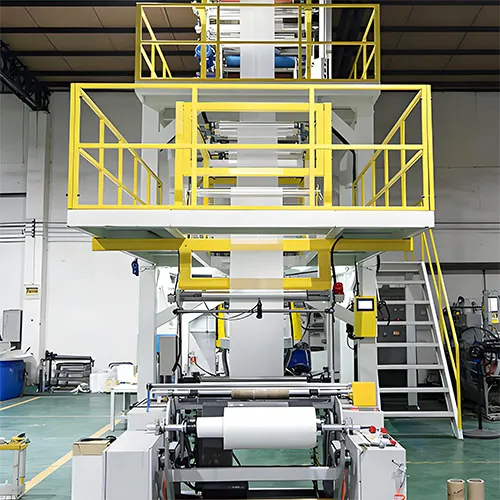
This is one of the most common B2B questions. An ABA structure is often selected when cost efficiency matters most. It lets you use stronger outer layers and a more economical middle layer, which can support downgauging and selected reuse strategies in suitable products. For commodity packaging, courier bags, liners, and general-purpose films, that can be a smart path.
An ABC or fully independent 3-layer co-extrusion structure gives more freedom. That matters when the plant serves customers in medical, hygiene, or premium packaging segments where material function must be controlled more precisely. It is also better for factories that want room to expand into higher-spec multilayer blown film applications over time.
The business lesson is simple. Choose the structure that fits your order mix, not just your brochure. A low-cost film machine 3 layer setup may win the first project, but a more flexible co extrusion machine may create better margins across five years. That is why we usually review not just today’s film SKU, but also the next 24 months of capacity planning.
Stable mass production is not about one magic setting. It comes from disciplined process control. In many plants, the fastest gains come from better resin management, startup procedures, screw and heater checks, haul-off alignment, and winding consistency.
Here is the practical checklist we use most often in a blown film plant or film blowing machine project:
This sounds basic. It is. But basic discipline creates real output. When a supplier supports FAT, installation, commissioning, training, spare parts, and remote troubleshooting, the machine can be used far more effectively over its life. That is especially important for overseas buyers who need fast support without long production interruptions.
A 3 layer blown film line is widely used because it serves many markets without the complexity of ultra-high-end barrier systems. We commonly see it in:
Some processors also use layer hdpe film blowing machine configurations for stiff bag products, while others focus on softer packaging film structures. This flexibility is exactly why film lines remain a core investment area in packaging and converting factories.
Blown film is also widely associated with higher-performance, coextruded, and even barrier applications, especially where converters want stronger structure and better packaging performance in one process.
Many suppliers can ship a line. Fewer can support a project. For overseas B2B customers, especially mid- to large-scale processors, the real buying decision usually includes four layers: equipment, process support, delivery control, and lifecycle service.
That is why your positioning matters. A factory-direct, engineering-driven machine manufacturer should provide:
In our experience, this is what builds trust. Owners want ROI. Project managers want milestone certainty. Engineers want stable output. Maintenance teams want service access. A one-stop supplier that covers plastic extrusion, process support, and after-sales care is much easier to scale with than a trader who only ships machinery.
A 3-layer co-extrusion blown film machine is not just a tool for current orders. It is a growth platform. It lets converters move from basic films into better-value structures. It supports future resin optimization. It opens room for better downgauging, more stable sealing, and wider product coverage.
For a factory serving packaging, medical, and industrial customers, that flexibility is powerful. You may start with commodity bags or liner film. Later, you may move into cleaner packaging, tougher transport film, or more demanding coextruded jobs. A well-chosen layer blown film extrusion machine makes that transition smoother.
So when I look at a co extrusion blown film machine, I do not ask only, “What can it run today?” I ask, “What will it help this plant become?” That is the better B2B question. And in many cases, the answer is simple: a more reliable, more scalable, and more profitable operation.
Yes, for many converters it is. A 3 layer blown film extrusion setup gives more control over strength, sealing, stiffness, and cost because each layer can do a different job. That usually creates better product flexibility than a mono-layer line.
ABA often focuses on cost efficiency by using a core layer for cost control, sometimes with suitable reclaimed content strategies. ABC gives more independent material control and is often better for premium packaging, medical, or specialized film structures.
In many cases, yes. A properly configured line can support HDPE, LDPE, LLDPE, and selected blends, but the final answer depends on screw design, die design, cooling system, and the target product range.
No. But IBC is very useful when tighter tolerance, faster cooling, better layflat control, and higher productivity are priorities. For export-grade production, it is often worth evaluating early.
Common sectors include food packaging, industrial packaging, e-commerce bags, hygiene products, medical packaging support films, agricultural film, and selected protective or specialty applications.
Ask for resin recommendations, real output range, FAT standards, film width and thickness capability, delivery milestones, spare-parts plan, remote support policy, and upgrade options for future capacity expansion.
If your factory wants more than basic output, a 3-layer co-extrusion blown film machine is often the right next move. It improves flexibility, supports more stable production, and creates a stronger base for long-term growth. For B2B processors, the best investment is not just a machine. It is a complete solution with engineering, delivery, training, and service behind it.
An injection molding machine improves output when it matches the resin, mold, cycle target…
Many film plants struggle with unstable output, uneven film thickness, slow changeovers, a…
We will reply you within 24 hours. If for urgent case, please add WhatsApp/WeChat: +86 15653430206,. Or call +86 15653430206 directly.
*We respect your confidentiality and all information are protected.
We will only use your information to respond to your inquiry and will never send unsolicited emails or promotional messages.