

شرح الفرق بين آلة القولبة بالحقن الهيدروليكية وآلة القولبة بالحقن الكهربائية بالكامل
تولد آلة القولبة بالحقن الهيدروليكية قوة التثبيت وقوة الحقن من خلال الضغط…
22 أغسطس 2026
 2026-07-09-16:10
 قد يؤدي اختيار آلة نفخ الأغشية غير المناسبة إلى عدم استقرار سماكة الأغشية، وضعف متانتها، وسوء عملية اللف، وارتفاع معدل الفاقد، وتأخر التسليم. وبالنسبة لإنتاج أغشية التغليف، أو أغشية الأكياس، أو أغشية التغطية، أو الأغشية القابلة للانكماش، فإن اختيار المعدات المناسبة والدعم الفني المناسب للعملية يُحدثان فرقًا كبيرًا.
A film blowing machine is plastic extrusion machinery used to produce plastic film. Plastic pellets are melted in an extruder, pushed through a circular die, inflated into a film bubble, cooled by an air ring, flattened by a collapsing frame and nip rolls, then wound into film rolls for packaging or bag making.
A ماكينة نفخ الأفلام is used to make thin plastic film from plastic pellets. It is also called a blown film machine, blown film extruder, blown film extruder machine, or blown film extrusion machine. The machine melts plastic raw material and shapes it into a continuous tubular film.
The basic idea is simple. The extruder heats and melts the polymer. The molten plastic moves through a die head. Air is introduced to inflate the tube into a film bubble. The film cools, rises, flattens, and becomes a film roll.
This type of machinery is widely used in packaging, agriculture, retail, food packaging, industrial bags, shrink film, garbage bags, shopping bags, courier bags, and protective film. For many factories, a blown film line is the first step before bag making, printing, laminating, or cutting.
For B2B buyers, a blow film project should not be viewed as only one machine. A stable film production line needs the right extruder, screw, die head, air ring, cooling system, collapsing frame, nip rolls, winder, control system, and operator training.
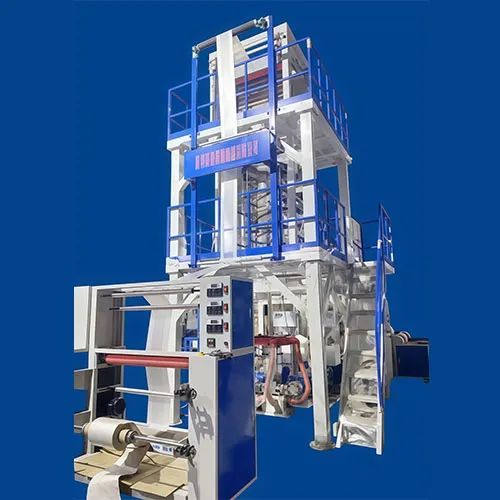
The blown film process starts with plastic pellets. Common raw material includes LDPE, LLDPE, HDPE, PP, polyethylene blends, and sometimes biodegradable or recycled materials. These pellets enter the hopper and move into the extruder.
Inside the extruder, the screw rotates. Heat and friction melt the plastic material. The molten plastic is pushed through a circular die. As the plastic leaves the blown film die, air pressure inflates it into a tube. This tube becomes the film bubble.
The process usually follows these steps:
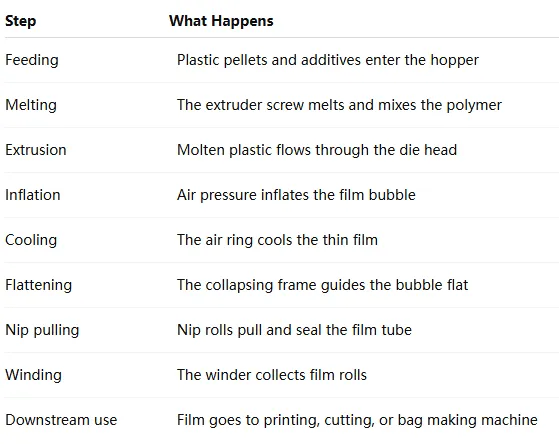
The key point is balance. The screw speed, melt temperature, die gap, air ring cooling, air pressure, nip speed, and winder tension must work together. If one setting changes too much, film thickness and film roll quality can change.
A complete blown film machine has several important parts. Each part affects film stability, thickness, strength, clarity, and productivity.
The main components include:
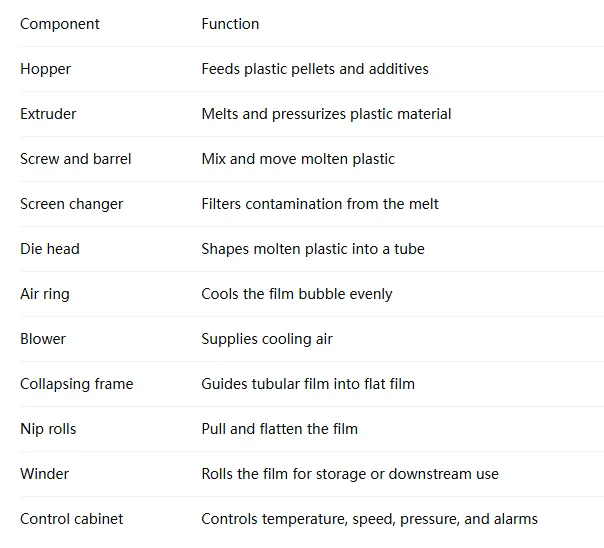
The die head and air ring are especially important. A poor die head can cause uneven film thickness. A weak air ring can create bubble instability, poor cooling, and wrinkled film.
A good ماكينة نفخ الأفلام should also be easy to operate and maintain. For overseas factories, this matters because spare parts, remote support, and operator training directly affect uptime.
Most blown film production uses thermoplastic materials. The most common materials are LDPE, LLDPE, HDPE, PP, and polyethylene blends. Some factories also process biodegradable resin, recycled pellets, masterbatch, calcium carbonate filler, or specialty additives.
Different materials behave differently in film blowing:
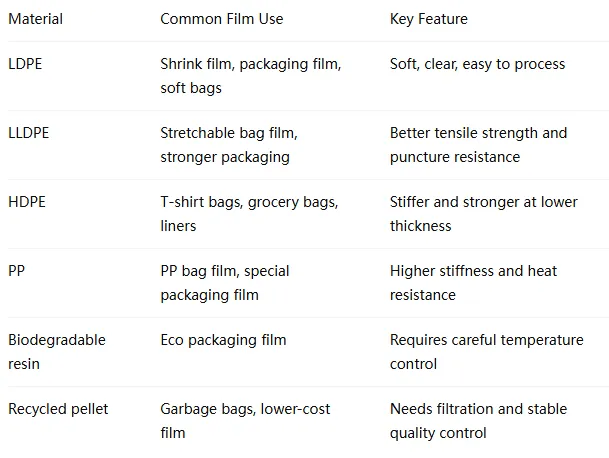
Plastic film quality depends heavily on raw material. If the pellet quality is unstable, the film may show gels, black spots, holes, thickness variation, or weak sealing.
Additive selection is also important. Slip agents, antiblock agents, color masterbatch, UV stabilizers, filler, and processing aids may be used. The formula should match the final film application, such as food packaging, mulch film, bag film, shrink film, or industrial packaging.
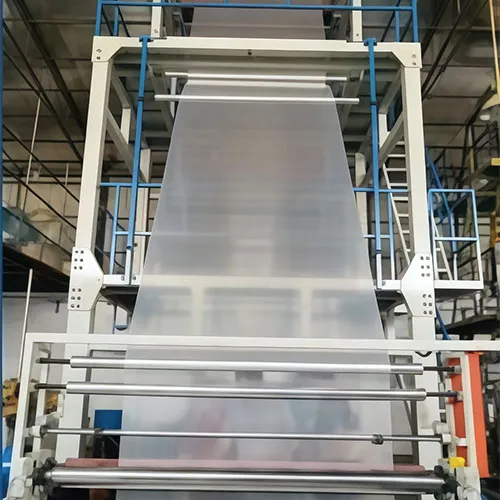
A blown film extrusion machine can produce many types of plastic film products. The final application depends on material, film thickness, width, layers, strength, and downstream processing.
Common products include:
A film production line may produce rolls first. Then the film rolls can be sent to a printing machine, cutting machine, sealing machine, or bag making machine. This is why buyers should think about the full production line, not only the main extruder.
For example, a packaging factory that wants to produce plastic bags may need a blown film line plus a bag making machine. A food packaging factory may need better material control, cleaner production, and stable thickness. A mulch film factory may need wider film and stronger winding control.
A single-layer blown film machine uses one extruder and one die channel. It produces one-layer film. This is simple, economical, and suitable for many general packaging applications.
Layer blown film uses more than one material layer. A two-layer, three-layer, or multi-layer co-extrusion line can combine different materials in one film. This can improve strength, sealing, barrier performance, surface quality, or material cost control.
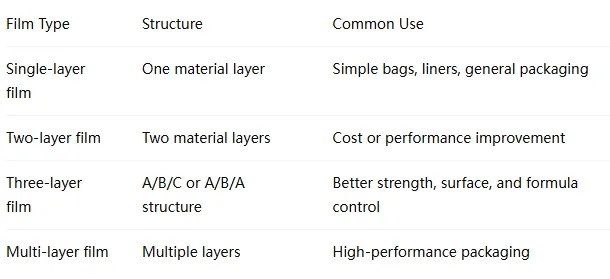
Layer film is useful when one material cannot meet all needs. For example, one layer may provide strength, another layer may provide sealing, and another may improve surface appearance.
A three-layer co-extrusion film blowing system can give buyers more control over material use. It can also support recycled material in selected layers when product requirements allow.
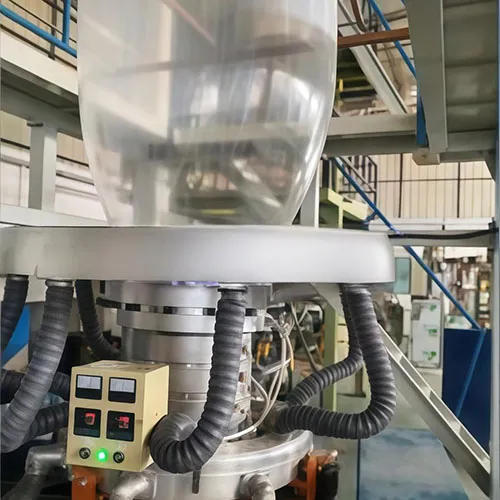
أن ABA film blowing machine is a type of three-layer co-extrusion line. It usually uses two extruders to produce three layers: A/B/A. The outer A layers may use better-quality resin for surface and sealing, while the middle B layer may use lower-cost material, filler, or recycled content where suitable.
This makes ABA film blowing attractive for garbage bags, shopping bags, T-shirt bags, and some packaging film products. It can help reduce raw material cost while keeping better surface quality than some simple single-layer films.
A basic ABA structure looks like this:
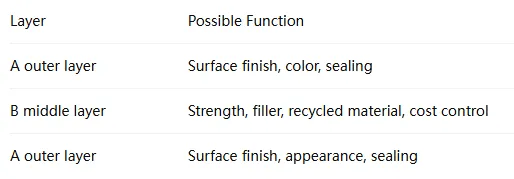
Co-extrusion is not only about adding layers. It requires good screw design, stable melt flow, accurate die design, and strong process control. If layer ratio is unstable, the final film may have uneven strength, poor thickness control, or weak sealing.
For buyers, the choice between single-layer, ABA, three-layer, or more advanced co extrusion should be based on product use, material formula, output target, film thickness, and budget.
Blown film and cast film are two common plastic film production methods. Both can produce useful films, but they work differently.
Blown film uses a circular die and air pressure to inflate a film bubble. The film is cooled by air, flattened, and wound. Cast film uses a flat die and chill rolls to cool the film quickly. Cast film is often used when high clarity, flatness, and fast cooling are needed.
For many plastic bag and packaging film applications, blow film is a practical choice. For very high-speed thin film or special surface requirements, cast film may be considered.
A good supplier should not push one process for every project. The right process depends on product type, material, thickness, width, output, and final film performance.
Choosing the right ماكينة نفخ الأفلام starts with the final product. Buyers should not only ask for “a blown film machine price.” A useful quote needs product details, material, film width, thickness, output, layers, and downstream use.
Before requesting a quotation, prepare these details:

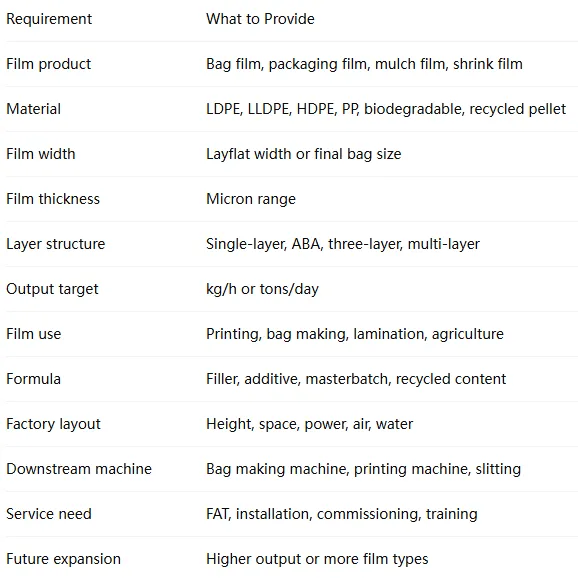
A mini blown film machine or lab film blowing machine may be suitable for testing, training, or small-scale research. But for industrial packaging production, buyers usually need a high-speed blown film production line with stable output, strong control, and reliable service support.
A compact blown film line can save space, while a larger co-extrusion line can support more complex film products. The right choice depends on your real business goal.
A one-stop plastic machinery supplier helps buyers build a complete and stable production solution. Film blowing is often linked with extrusion, recycling, pelletizing, printing, and bag making. If these systems do not match, production may become inefficient.
As a factory-direct, engineering-driven supplier, we serve global B2B customers in thin-wall and food packaging, medical solutions, industrial precision components, extrusion, film blowing, injection molding, and recycling-related production. We provide equipment, process support, turnkey delivery, and full lifecycle service.
We can support buyers with:
For overseas packaging manufacturers, EPC contractors, system integrators, and regional distributors, this support reduces risk. Owners need a clear investment plan. Project managers need delivery milestones. Engineers need stable process support. Maintenance teams need spare parts and service.
A reliable machine manufacturer should help buyers reach stable mass production, not only ship machinery.
A film blowing machine is used to produce plastic film from plastic pellets. It is widely used for packaging film, plastic bags, shopping bags, garbage bags, mulch film, shrink film, and industrial bag film.
A blown film machine melts plastic in an extruder, pushes molten plastic through a circular die, inflates it into a film bubble, cools it with an air ring, flattens it through a collapsing frame and nip rolls, then winds it into film rolls.
Common materials include LDPE, LLDPE, HDPE, PP, polyethylene blends, biodegradable materials, recycled pellets, color masterbatch, and other additives.
أن ABA film blowing machine is a three-layer co-extrusion blown film line. It usually uses two extruders to produce A/B/A film, allowing different materials in the outer and middle layers.
Blown film uses a circular die and air cooling to make a film bubble. Cast film uses a flat die and chill rolls. Blown film is common for bags and packaging, while cast film is often used for applications needing high flatness or clarity.
Uneven film thickness may be caused by unstable extrusion output, poor die gap control, weak air ring cooling, unstable bubble, wrong haul-off speed, or poor material mixing.
Buyers should provide film application, material, film width, thickness, output target, layer structure, formula, factory layout, downstream equipment needs, and service requirements.

تولد آلة القولبة بالحقن الهيدروليكية قوة التثبيت وقوة الحقن من خلال الضغط…

اضبط معلمات عملية القولبة بالحقن بترتيب محدد: درجة حرارة الأسطوانة والقالب، …
سنرد عليك في غضون 24 ساعة. إذا كانت الحالة عاجلة، يُرجى إضافة واتساب/وي شات: +86 15653430206,. أو اتصل على +86 15653430206 مباشرة.
*نحن نحترم سريتك وجميع معلوماتك محمية.
لن نستخدم معلوماتك إلا للرد على استفسارك ولن نرسل أبداً رسائل بريد إلكتروني غير مرغوب فيها أو رسائل ترويجية.