

Hydraulische Spritzgießmaschine vs. vollelektrische Spritzgießmaschine – eine Erklärung
Eine hydraulische Spritzgießmaschine erzeugt die Schließ- und Einspritzkraft durch eine Presse…
22. August 2026
 2026-07-03-14:43
 Kunststoffrecyclinganlagen verzeichnen häufig Produktionsausfälle, da weiche Folien, gewebte Säcke und flexible Abfälle nur schwer zu gleichmäßigen Granulaten zerkleinert werden können. Strangbrüche, manuelle Handhabung, feuchte Granulate und eine schlechte Granulatform verlangsamen die Produktion. Ein Wasserring-Granulator bietet eine kompakte, kontinuierliche Lösung für eine sauberere Granulierung.
A water ring pelletizer is a die-face cutting pelletizing system used in plastic recycling. Molten polymer from the extruder is cut directly at the die face by rotating blades, cooled by a ring of cooling water, then sent to dewatering and drying equipment to produce reusable recycled pellets.
A Wasserringgranulierer is a plastic pelletizing machine used to turn molten plastic into small pellets. It is often used in plastic recycling lines, especially for PP, PE, LDPE, HDPE, film scrap, raffia, and woven bags.
The system works after the extrusion stage. First, the extruder melts and pushes the plastic through a die plate. Then the cutter cuts the molten polymer at the die face. A water-ring cooling area quickly cools the pellet, and the pellets move with water to dewatering and drying equipment.
In simple words, a water ring pelletizer helps turn waste into reusable pellets. For recycling plants, this means more stable pellet shape, easier material handling, and better production efficiency than many manual systems.
For B2B buyers, the machine is not only a cutter. It is part of a complete pelletizing system that includes extrusion, filtration, die-face cutting, water circulation, centrifugal dewatering, drying, screening, and pellet collection.
A water ring pelletizer system usually starts with plastic feeding. The raw material may come from washed film, post-consumer bags, post-industrial scrap, PP woven bags, PE film, or crushed plastic. The material enters the extruder and becomes molten plastic under heat, screw movement, and pressure.
After melting and filtration, the molten polymer flows through the die plate. High-speed rotating blades cut the material directly at the die face. At the same time, a ring of cooling water surrounds the cutting area and carries the pellets away.
A typical workflow looks like this:
The key point is timing. The pellet is cut while the material is still molten, then cooled quickly. This helps produce a smooth pellet shape and supports continuous operation.
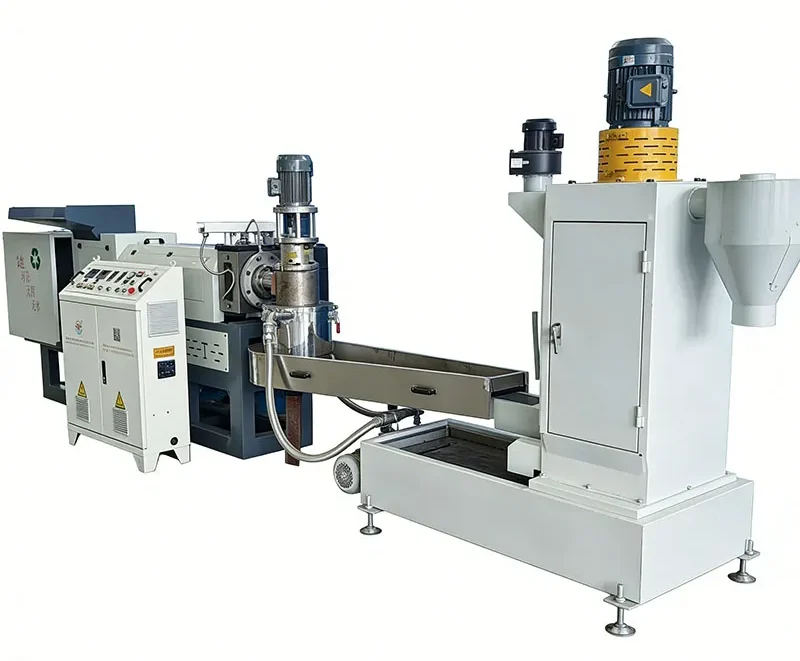
Water ring pelletizing is widely used for thermoplastic recycling. It is especially practical for soft, flexible, or low-bulk-density materials that may be difficult to handle in a traditional strand line.
Common materials include:
PP and PE are common because they are widely used in packaging, film, bags, and woven products. Polyethylene and polypropylene can often be recycled into pellets for further extrusion, injection molding, or compounding, depending on cleanliness, formula, and final use.
For mixed, dirty, or wet material, the recycling process must include proper washing, drying, filtration, and feeding control. A Wasserringgranulierer cannot solve poor material preparation alone. Good pellet quality starts before pelletizing.
A complete water ring pelletizing system includes several machines working together. If one part is weak, the final pellet may become wet, uneven, dusty, or unstable.
Main components include:
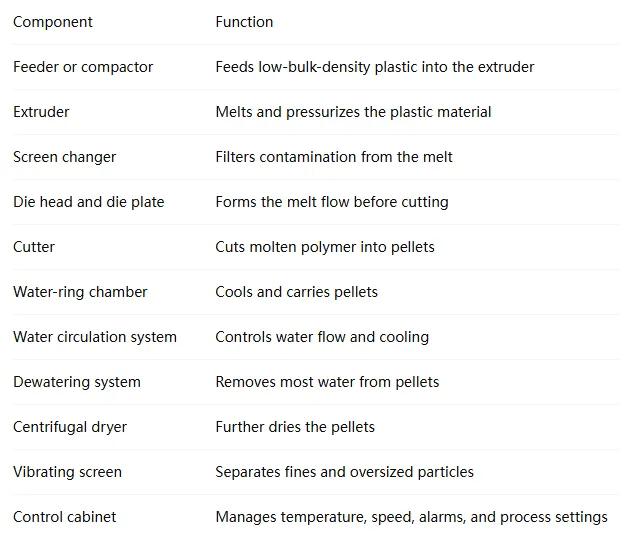
The extruder and screw design are very important. For film recycling, the system may need a force feeder or compactor because film is light and fluffy. For rigid flakes, the feeding method may be different.
A high-performance pelletizing machine line should match the material, output target, pellet size, moisture requirement, and downstream use of the recycled pellets.
Die-face cutting is the core of water ring pelletizing. Instead of pulling long plastic strands through a cooling tank and cutting them later, the cutter cuts directly at the die face. This is why the system is compact and easier to automate.
In die-face pelletizing, molten material exits the die holes and is cut immediately. The blade speed, die plate temperature, melt pressure, and material flow must stay stable. If the die face is dirty or the blades are worn, pellet shape may become poor.
Important control points include:
The goal is a uniform pellet with good shape, stable size, and low moisture content. For recycling operations, stable pellet size supports better feeding in downstream extrusion or injection molding.
Good die-face cutting also reduces manual intervention. This is one reason water ring pelletizers are often selected for continuous recycling lines.
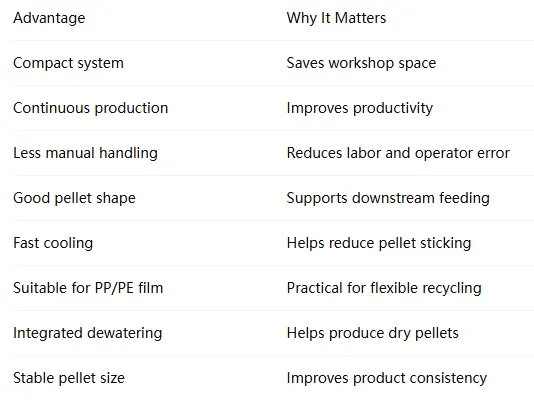
The advantages of Wasserringgranulatoren are clear for many PP and PE recycling applications. They support compact layout, continuous cutting, quick cooling, and automatic dewatering. They can also reduce labor compared with traditional strand handling.
Key advantages include:
For film recycling, water ring pelletizing is often a preferred choice because soft material can be difficult to handle as strands. A water-ring pelletizing production system cuts the melt directly and moves pellets through water for cooling.
When designed well, the system can produce smooth pellet output with good bulk density and reliable drying. This helps recycling facilities sell or reuse the material more easily.
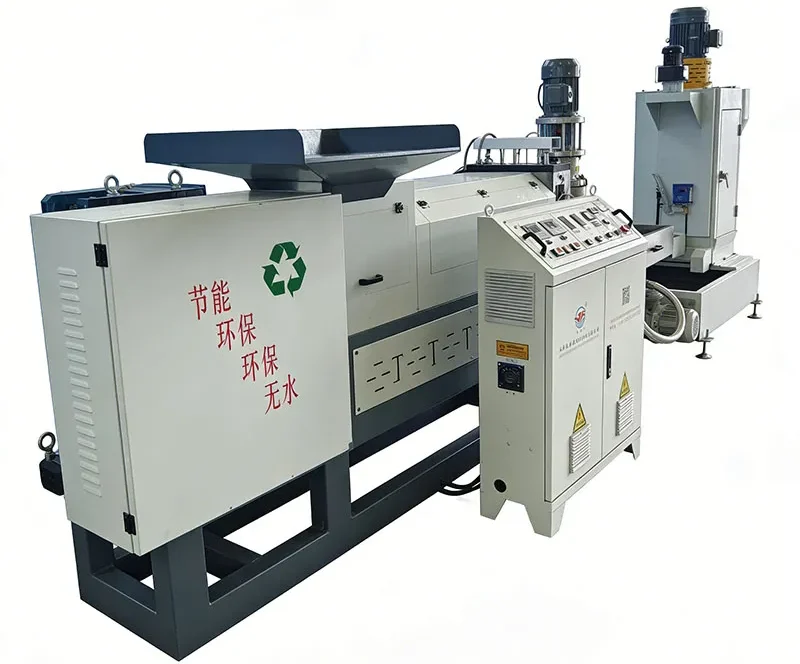
The comparison of water ring pelletizer vs strand pelletizing depends on material and production goals. Strand pelletizing is traditional and widely used. It cools plastic strands in a water tank, then cuts the cooled strands into pellets.
Traditional strand pelletizing can work well for many rigid polymers, clean materials, and compounding lines. However, the strand may break, stick, or require more manual adjustment. This can be a problem when processing soft film scrap or low-bulk-density recycling material.
A Wasserringgranulierer cuts the material at the die face and cools it immediately. This can make the system more compact and automatic.
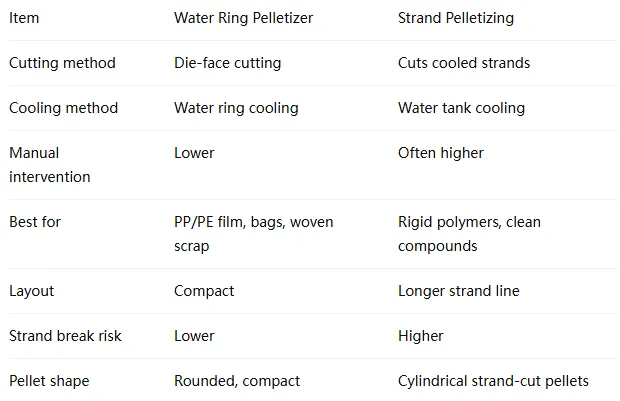
For many film recycling plants, water ring pelletizing is easier to operate than a traditional strand system. But the best pelletizing method should still be selected based on material, output, formula, moisture, and pellet quality target.
Water ring pelletizers and underwater pelletizers both use die-face cutting and water cooling, but they are not the same. An underwater system cuts the polymer inside a water-filled cutting chamber. It is often used for high-throughput polymer production and more demanding pelletizing applications.
A water ring system usually has a simpler structure and is widely used in recycling lines. It is often more economical for PP, PE, film, woven bags, and flexible scrap recycling. Underwater pelletizers may be better for higher-capacity production, sensitive materials, or applications requiring very controlled pellet quality.
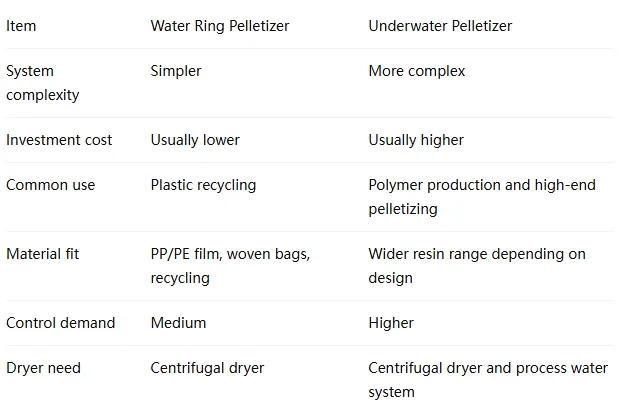
For buyers, the choice should not be based only on machine name. A supplier should review the polymer type, output, pellet quality, process stability, budget, and long-term service needs.
Dewatering and drying are critical after pelletizing. If pellets contain too much water, they may stick, foam, create storage problems, or cause downstream processing issues. Good drying supports low moisture content and free-flowing pellets.
A typical water ring pelletizing system uses a dewatering screen or high-efficiency dewatering device first. Then the pellets enter a centrifugal dryer. The centrifugal force removes water from the pellet surface, helping dry the pellets before screening and packing.
Water circulation is also important. The water must cool the pellets, carry them forward, and help prevent sticking. If water temperature is too high, pellets may soften or stick together. If water flow is weak, cooling and transport may become unstable.
Key quality factors include:
For recycling plants, a stable dewatering and drying system protects pellet quality and improves downstream productivity.
Choosing the right water ring pelletizing machine line starts with the material. Buyers should not only ask for a price. They should first confirm feedstock type, contamination level, moisture content, bulk density, target output, and final pellet use.
Before requesting a quote, prepare these details:
A stable line must match upstream and downstream equipment. For example, film recycling may need crushing, washing, squeezing, compacting, extrusion, filtration, pelletizing, dewatering, drying, and packing.
The right supplier should help evaluate the whole recycling process, not only the water ring pelletizer.
A one-stop plastic machinery supplier helps buyers reduce risk when building recycling solutions. Pelletizing is only one step. A real recycling line may include washing, drying, feeding, extrusion, melt filtration, pelletizing, dewatering, drying, packing, and after-sales support.
Als direkt vom Hersteller liefernder, technikorientierter Anbieter, we serve global B2B customers in thin-wall and food packaging, medical solutions, industrial precision components, plastic extrusion, film blowing, and recycling projects. We provide equipment, process support, turnkey delivery, and full lifecycle service.
We can support:
For overseas recycling plants, EPC contractors, system integrators, and regional distributors, this support makes purchasing easier. It also helps buyers improve yield, reduce manual work, and plan future capacity expansion.
A Wasserringgranulierer is used to cut molten plastic into pellets during plastic recycling or extrusion. It is commonly used for PP, PE, film, woven bags, and flexible plastic scrap.
Water ring pelletizing cuts molten polymer at the die face using rotating blades. A ring of cooling water cools and transports the pellets to dewatering and drying equipment.
Common materials include PP, PE, LDPE, HDPE, film scrap, woven bags, raffia, shopping bags, and flexible polyolefin recycling materials.
For soft film, woven bags, and flexible recycling materials, a water ring pelletizer can reduce strand breakage and manual handling. Strand pelletizing may still be suitable for clean rigid materials and some compounding applications.
Water ring pelletizing is often simpler and commonly used in plastic recycling lines. Underwater pelletizing is usually more complex and is often used for higher-output or more demanding polymer pelletizing applications.
Dewatering removes water from pellets after cooling. Good dewatering and drying help produce low-moisture pellets, prevent sticking, and improve downstream processing.
Buyers should provide material type, feedstock form, washing condition, moisture level, output target, pellet use, factory layout, automation needs, and service requirements.

Eine hydraulische Spritzgießmaschine erzeugt die Schließ- und Einspritzkraft durch eine Presse…

Legen Sie die Parameter des Spritzgussprozesses in einer festgelegten Reihenfolge fest: Zylinder- und Formtemperatur, …
Wir werden Ihnen innerhalb von 24 Stunden antworten. Wenn für dringenden Fall, fügen Sie bitte WhatsApp/WeChat: +86 15653430206,. Oder rufen Sie direkt +86 15653430206 an.
*Wir respektieren Ihre Vertraulichkeit und alle Informationen sind geschützt.
Wir verwenden Ihre Daten nur zur Beantwortung Ihrer Anfrage und senden Ihnen niemals unaufgefordert E-Mails oder Werbenachrichten.