¿Luchando con la calidad de pellets inconsistente, alto contenido de humedad o producción de pelletización inestable? Estos problemas pueden reducir la eficiencia y aumentar los costos. Un sistema de pelletizadora de anillo de agua bien diseñado resuelve estos problemas con una pelletización estable, corte preciso y enfriamiento eficiente, garantizando una producción de alta calidad y fiable.
Una pelletizadora de anillo de agua es un sistema de pelletización de alta eficiencia que convierte plástico fundido en pellets uniformes utilizando un cortador de cara de matriz y enfriamiento por agua en circulación. Se utiliza ampliamente para PE, HDPE, LDPE y materiales biodegradables, ofreciendo un rendimiento estable, bajo contenido de humedad y excelente calidad de pellets para líneas modernas de procesamiento y reciclaje de plástico.
¿Qué es una Pelletizadora de Anillo de Agua y Cómo Funciona?
Una pelletizadora de anillo de agua es un tipo de máquina de pelletización utilizada en el procesamiento de plástico para convertir polímero fundido en pellets uniformes. Se aplica ampliamente en la pelletización de plástico, especialmente para materiales termoplásticos como PE, HDPE y LDPE.
En un típico granulador de anillo de agua sistema, el material fundido del extrusor sale a través de una placa de matriz. Un cortador de cara de matriz de alta velocidad corta el material en pequeños pellets, que son inmediatamente enfriados por agua en circulación.
El proceso clave implica:
- Extrusión de plástico fundido
- Corte en la cara de la matriz
- Enfriamiento usando pelletización de anillo de agua
- Deshidratación y secado
Este método asegura una formación de pellets uniforme, bajo contenido de humedad y un rendimiento de pelletización estable.
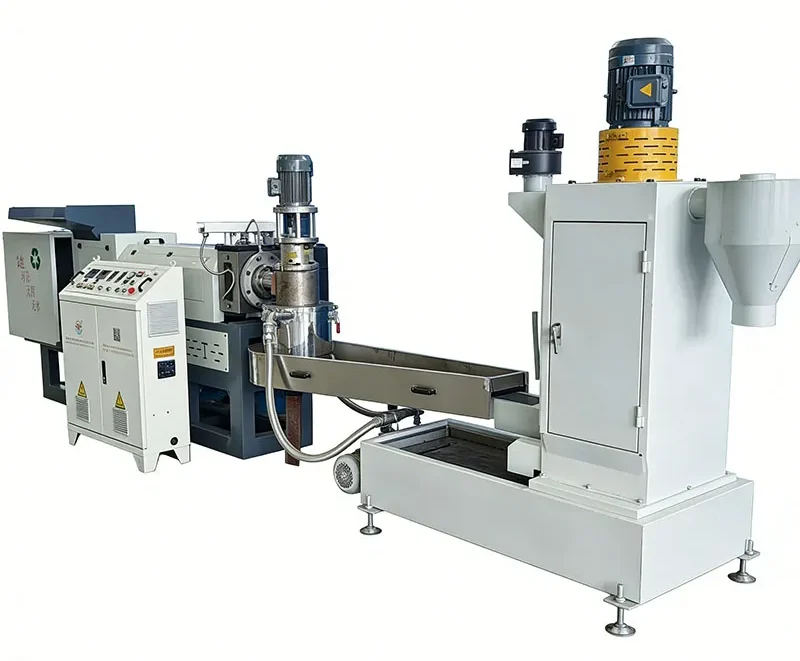
¿Cuáles son las Características y Ventajas Clave de las Pelletizadoras de Anillo de Agua?
Al seleccionar un granulador de anillo de agua, comprender sus características y ventajas es fundamental.
Ventajas Clave
- Pelletización estable para una producción consistente
- Corte y enfriamiento de alta eficiencia
- Bajo costo operativo y de mantenimiento
- Proceso de corte de cara de matriz preciso
- Excelente control de la temperatura del agua
Aspectos Destacados del Rendimiento
- Produce un tamaño de pellet uniforme
- Reduce la degradación del material
- Soporta las necesidades de producción de alto rendimiento
- Asegura una gestión consistente de la calidad de los pellets
Por mi experiencia trabajando con compradores B2B globales, estos factores suelen ser los puntos decisivos al actualizar una línea de pelletización.
¿Qué Materiales Se Pueden Procesar en Pelletización de Anillo de Agua?
Una pelletizadora de anillo de agua es altamente versátil y soporta casi todos los termoplásticos.
Materiales Comunes
- PE (polietileno)
- HDPE y LDPE
- PVC y ABS
- TPU y TPO
- PLA (polímero biodegradable)
También se utiliza ampliamente en:
- Producción de máster
- Proceso de reciclaje de plástico
- Materiales de alta viscosidad
Esta flexibilidad lo convierte en una elección preferida para líneas de procesamiento de plástico industriales.
Pelletizadora de Anillo de Agua vs Pelletización por Hilo: ¿Cuál es Mejor?
Ambos sistemas tienen su lugar, pero el sistema de pelletizadora de anillo de agua es generalmente mejor para la producción automatizada.
Perspectivas de Comparación
- La pelletización por anillo de agua es ideal para operaciones continuas
- La pelletización por hilo se adapta a la producción a pequeña escala
Si tu objetivo es:
- Alta producción
- Pelletización estable
- Bajo contenido de humedad
Entonces un granulador de anillo de agua es la mejor opción.
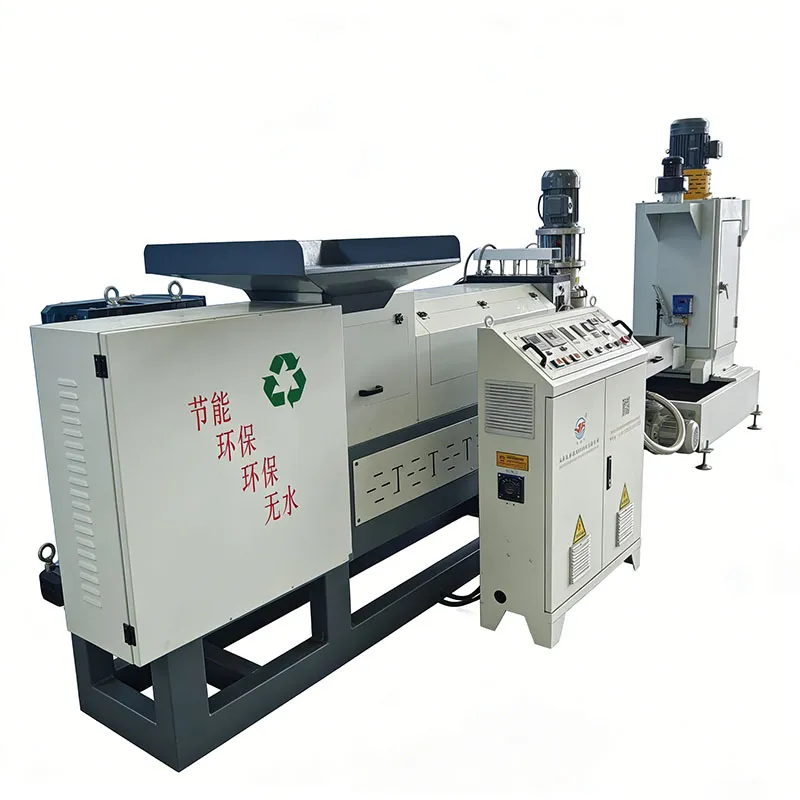
¿Cómo elegir la máquina de pelletización adecuada para su línea de producción?
Elegir el sistema de pelletización adecuado depende de sus necesidades de producción.
Factores clave
- Rendimiento requerido
- Tipo de materias primas plásticas
- Tamaño y forma de pellet deseados
- Nivel de automatización
- Presupuesto y bajo costo operativo
Por ejemplo:
- Extrusora de un solo tornillo → materiales simples
- Extrusora de doble tornillo → compuestos complejos
Una solución de pelletización bien ajustada puede reducir significativamente los costos de materias primas y mejorar la eficiencia.
¿Cómo optimizar el rendimiento y la calidad de los pellets en la producción de pelletización?
Optimizar su línea de producción de pelletización requiere atención al detalle.
Consejos de optimización
- Mantener una temperatura de agua estable
- Utilizar sistemas adecuados de cambio de pantalla
- Asegurar un proceso de corte consistente
- Monitorear el contenido de humedad
- Actualizar a un sistema avanzado de circulación de agua
Estos pasos pueden mejorar:
- Eficiencia mejorada
- Mejor calidad de pellet
- Menor tiempo de inactividad
Preguntas frecuentes
¿Cuál es la diferencia entre un granulador de anillo de agua y un granulador de hilo?
A granulador de anillo de agua utiliza corte de cara de matriz y enfriamiento por agua, mientras que la pelletización de hilo se basa en enfriar hilos antes de cortarlos. Los sistemas de anillo de agua ofrecen mayor eficiencia y mejor uniformidad de los pellets.
¿Puede un granulador de anillo de agua procesar plásticos biodegradables como PLA?
Sí, es adecuado para PLA y otros materiales biodegradables debido a su proceso de corte y enfriamiento controlado por temperatura.
¿Cuál es el contenido de humedad típico después de la pelletización?
Con un deshidratado y secado adecuados, el contenido de humedad es muy bajo, lo que hace que los pellets sean adecuados para su reutilización directa.
¿Es necesaria una extrusora de doble tornillo para la pelletización?
No siempre. Se prefiere una extrusora de doble tornillo para la mezcla, mientras que una extrusora de un solo tornillo funciona para materiales estándar.
¿Cómo afecta la circulación de agua a la calidad del pellet?
Un sistema de circulación de agua estable asegura un enfriamiento constante, previniendo deformaciones y mejorando la uniformidad de los pellets.
¿Qué industrias se benefician más de la pelletización de anillo de agua?
Industrias como envases, reciclaje, plásticos médicos y fabricación industrial son las que más se benefician.


 2026-04-10-13:50
