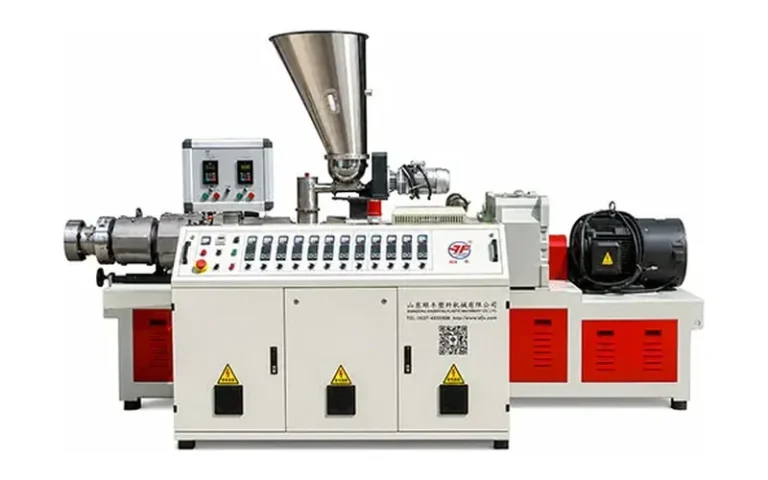
Choosing the wrong extrusion machine can cause unstable output, poor product size, high waste, and delivery delays. For plastic packaging, tubing, sheet, or profile production, one weak machine can slow the whole factory. The solution is to understand extrusion before buying equipment.
Um máquina de extrusão is industrial machinery that melts plastic raw material and pushes it through a shaped die to form continuous products. In plastic extrusion, an extruder uses a rotating screw, heated barrel, die, cooling unit, haul-off, cutter, or winder to produce plastic film, pipes, sheets, tubing, profiles, or coating.
What Is an Extrusion Machine?
An extrusion machine is equipment that turns raw material into a continuous shape. In plastic processing, the machine feeds plastic pellets, flakes, or powder into an extruder, melts the plastic, and pushes the molten plastic through a die. The die gives the material its final shape.
A plastic extrusion machine is often used to make products with a constant cross-section. These include plastic pipes, tubing, profiles, sheets, films, window frames, sealing strips, cable coating, and packaging materials. The shape is continuous. The size is controlled. The output can run for long hours.
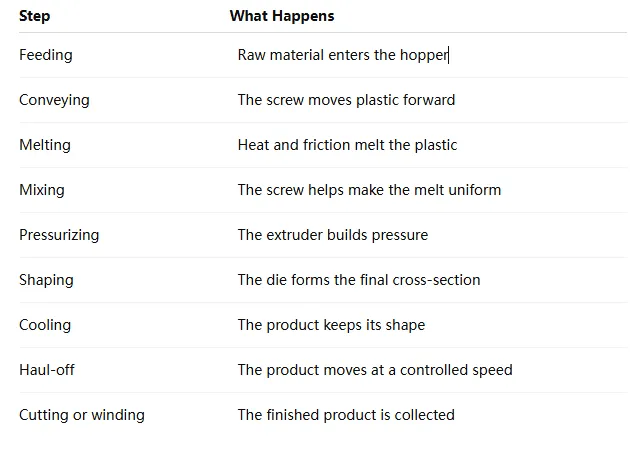
In simple words, extrusion works like this: feed, melt, shape, cool, pull, cut, or wind. The extruder is the heart of the extrusion line. The downstream equipment helps the product keep its shape and reach the required size.
For B2B buyers, extrusion is not only a manufacturing process. It is a production system. A stable extrusion machine must match the plastic material, screw design, die, cooling method, haul-off speed, control system, factory layout, and future output plan.
How Does an Extrusion Machine Work?
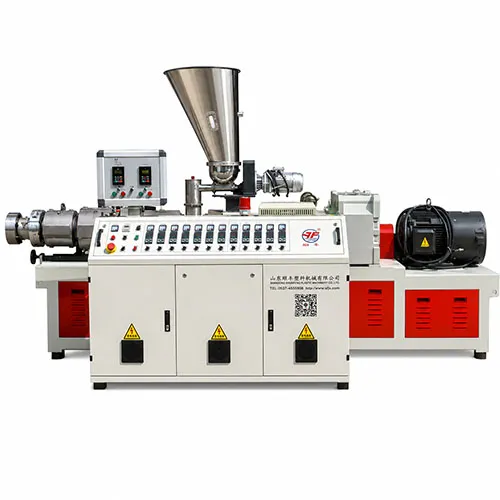
To understand how an extrusion machine work process happens, imagine plastic pellets moving through a heated tube. The hopper feeds the raw plastic into the barrel. Inside the barrel, a rotating screw moves the plastic forward. Heat, pressure, and friction help melt plastic into a smooth flow.
Once the thermoplastic material becomes molten plastic, the screw pushes it toward a specially designed die. The die forms the required shape. After the molten plastic leaves the die, it enters a cooling section. Then the product may be pulled, cut, wound, calibrated, or stacked.
A basic plastic extrusion process includes:
This continuous process makes extrusion different from injection molding. Injection molding produces one molded part per cycle. Extrusion produces a continuous profile, film, pipe, sheet, or coating.
What Are the Main Components of an Extruder?
An extruder has several key components. Each part affects stability, output, and product quality. The main components include the hopper, feeding section, screw, barrel, heater, gearbox, motor, screen changer, die head, cooling system, haul-off, cutter, winder, and control cabinet.
The hopper holds the raw material. The screw and barrel form the core of the extruder machines. The screw rotates and moves the plastic forward. The barrel provides the heated channel. The heaters help bring the material to the required melt temperature.
The die shapes the molten plastic. The cooling unit keeps the shape stable. The haul-off controls speed and product size. The control system manages temperature, pressure, speed, alarm functions, and process data.
Why Is Screw Design Important in Plastic Extrusion?
Screw design is one of the most important factors in plastic extrusion. The screw controls feeding, melting, mixing, pressure, and output stability. If the screw does not match the plastic material, the extrusion process may become unstable.
A standard extruder screw often includes a feeding zone, compression zone, and metering zone. The feeding zone moves raw material forward. The compression zone helps melt and compact the plastic. The metering zone delivers a more uniform melt to the die.
Different materials need different screw designs. PP, PE, PVC, PET, ABS, PA, and recycled plastic do not flow the same way. Some materials need stronger mixing. Some need gentle melting. Some need venting to remove moisture or gas.
Screw design affects:
- Capacidade de produção
- Melt quality
- Temperature stability
- Mixing performance
- Energy use
- Product surface
- Pressure stability
- Material degradation risk
For buyers, this means a cheap extrusion machine with the wrong screw can be expensive later. Poor screw design may create unstable melt, low output, black spots, poor thickness control, or weak product quality.
What Is the Difference Between Single-Screw and Twin-Screw Extruders?
Single-screw extruders use one screw inside the barrel. They are widely used because they are simple, reliable, and cost-effective. They work well for many PE, PP, and general thermoplastic extrusion applications.
Twin screw extruders use two intermeshing screws. They offer better mixing, stronger feeding, better compounding, and better control for some materials. Twin-screw extruders are common in PVC processing, masterbatch, filler compounding, engineering plastics, modified materials, and plastic recycling.
Twin screw extrusion technologies are useful when the formula is complex. If the product needs additives, fillers, color masterbatch, recycled content, or strong mixing, twin screw equipment may be the better choice.
For a standard PE pipe line or PP sheet line, a single-screw extruder may be enough. For PVC profile, high-filler material, or compounding, twin screw extruders are often preferred.
What Plastic Products Can Extrusion Machinery Produce?
Extrusion machinery can produce many plastic products. This is why it is widely used in packaging, construction, automotive, agriculture, medical packaging, electrical cable, and industrial applications.
Common extrusion applications include:
- Plastic film for packaging
- Blown film for bags
- Plastic pipes for water or drainage
- Tubing for industrial or medical use
- Plastic sheet for thermoforming
- Profile extrusion for window frames and seals
- Wire and cable coating
- Extrusion coating for packaging material
- Recycling pellets
- Masterbatch and compound materials
Extrusion produces continuous products. A pipe keeps coming out. A film roll keeps winding. A plastic sheet keeps moving through cooling rolls. This makes extrusion highly suitable for mass production.
For food packaging film and bag production, the extrusion line must support stable thickness, clean winding, and good output. For medical packaging, material control and cleaner production are important. For industrial precision components, product size and process control matter more.
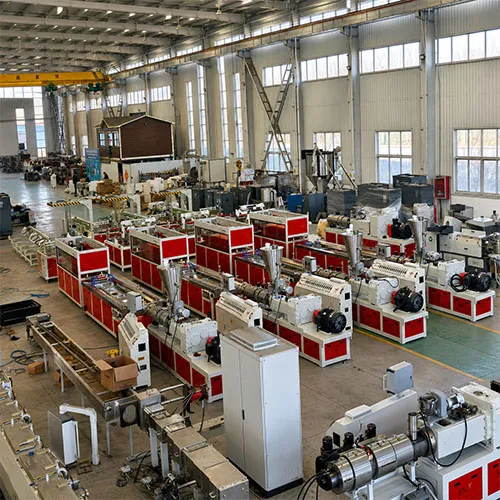
How Do Film, Pipe, Sheet, and Profile Extrusion Lines Differ?
Different plastic máquinas de extrusão use different downstream systems. The extruder may look similar at first, but the full extrusion line changes based on the product.
A film extrusion line may include an extruder, die, air ring, cooling tower, haul-off, corona treatment, winder, and control system. A blown film line uses air to expand the molten plastic tube into film. This is common for plastic packaging and bag production.
A pipe extrusion line usually includes an extruder, pipe die, vacuum calibration tank, cooling tank, haul-off, cutter, and stacker or coiler. The pipe must keep roundness, diameter, wall thickness, and surface quality.
A sheet extrusion line often uses a flat die and cooling rolls. The cooling rolls control plastic sheet thickness and surface texture. A profile extrusion line may use a profile die, vacuum calibration, cooling tank, haul-off, cutter, and stacking system.
What Process Control Points Affect Extrusion Quality?
Extrusion quality depends on process control. Even a good extrusion machine cannot produce stable products if temperature, pressure, screw speed, cooling, and haul-off speed are not controlled correctly.
Important process points include:
- Raw material drying and feeding
- Barrel temperature control
- Screw speed
- Melt pressure
- Melt temperature
- Die temperature
- Cooling speed
- Haul-off speed
- Product thickness
- Cutting or winding tension
- Screen changer condition
- Formação de operadores
Temperature and pressure must stay stable. If the melt temperature is too low, the plastic may not flow well. If it is too high, the plastic material may degrade. If haul-off speed changes, product thickness may change.
Process control also affects waste rate. A stable line can reduce scrap, improve product quality, and support long production runs. For overseas B2B buyers, this means better yield, faster project payback, and fewer service problems.
How Can a One-Stop Plastic Machinery Supplier Support Turnkey Projects?
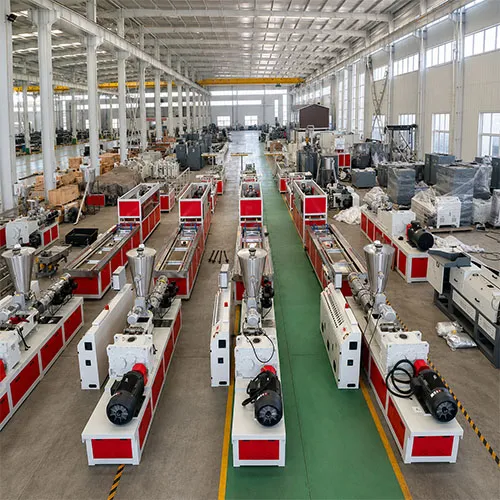
A one-stop plastic machinery supplier helps buyers reduce project risk. Instead of buying parts from many different sources, buyers can work with one team for equipment selection, process support, turnkey delivery, FAT, installation, commissioning, training, spare parts, and maintenance.
Our company serves global B2B customers in thin-wall and food packaging, medical solutions, and industrial precision components. We provide one-stop plastic machinery solutions covering injection molding, extrusion, film blowing, equipment support, process guidance, turnkey delivery, and full lifecycle service.
We support:
- Fast solution and quotation turnaround
- Extrusion machine selection
- Screw and barrel matching
- Film, pipe, sheet, and profile line planning
- Auxiliary equipment matching
- Factory layout support
- FAT before shipment
- Export-compliant documentation
- International logistics support
- Installation and commissioning guidance
- Formação de operadores
- Spare parts supply
- Remote troubleshooting
- Maintenance programs
For overseas buyers, this support is practical. Owners want clear investment plans. Project managers want delivery milestones. Process engineers want stable output. Maintenance teams want spare parts and support. A good supplier should serve all these needs.
Final Thoughts: A Good Extrusion Machine Starts with a Clear Production Goal
Um máquina de extrusão melts plastic, pushes it through a die, cools it, and forms continuous products such as film, pipe, sheet, tubing, profile, or coating. It is one of the most important machines in plastic manufacturing.
But the best extrusion machine is not always the biggest or cheapest one. It is the machine that fits your plastic material, product size, output target, quality requirement, factory layout, and future plan.
If you are planning a plastic extrusion project, send us your product type, raw material, target output, size requirement, factory layout, and delivery schedule. We can help you choose the right extrusion machine, match downstream equipment, prepare a practical quote, and support your project from FAT to stable production.
FAQs
Para que serve uma máquina de extrusão?
An extrusion machine is used to melt plastic and push it through a die to make continuous products such as plastic film, pipe, tubing, sheet, profile, coating, and pellets.
How does a plastic extrusion machine work?
A plastic extrusion machine feeds raw material into a hopper, moves it through a heated barrel with a rotating screw, melts it, pushes it through a die, cools it, and collects the finished product.
What are the main parts of an extruder?
The main parts include the hopper, screw, barrel, heaters, motor, gearbox, screen changer, die head, cooling system, haul-off, cutter or winder, and control cabinet.
What are the types of extruder machines?
Common types include single-screw extruders, twin screw extruders, film extrusion lines, blown film lines, pipe extrusion lines, sheet extrusion lines, profile extrusion lines, extrusion coating lines, and pelletizing lines.
What is the difference between single-screw and twin-screw extrusion?
Single-screw extrusion is simple and widely used for standard plastic products. Twin-screw extrusion offers stronger mixing and better control for PVC, compounding, masterbatch, recycling, and filled materials.
What information is needed for an extrusion machine quote?
Buyers should provide product type, raw material, output target, product size, tolerance, factory layout, voltage, downstream equipment needs, automation level, and service requirements.
Can one extrusion machine make different products?
Sometimes yes, but it depends on the machine, screw, die, downstream equipment, and material. A pipe line cannot easily become a blown film line without major changes. Buyers should confirm product range before ordering.


 2026-07-03-10:36