

Hydraulic Injection Molding Machine vs All-Electric Explained
A hydraulic injection molding machine generates clamping and injection force through press…
August 22 2026
 2026-05-26-09:51
 Plastic factories often lose money from unstable output, poor melt quality, and unclear equipment choices. A wrong extrusion machine can slow delivery, waste material, and make production teams fight daily problems. The right extrusion solution gives stable plastic extrusions, cleaner production, and easier long-term growth.
An extrusion machine melts plastic material and pushes it through a die to form continuous products such as pipe, plastic sheet, plastic film, plastic tubing, window frames, and custom plastic profiles. For B2B factories, the best plastic extrusion machine depends on raw materials, product shape, output target, screw design, cooling system, automation level, and after-sales support.
An extrusion machine is industrial machinery that turns raw plastic into a continuous shape. The machine heats, melts, mixes, and pushes molten plastic through an extrusion head or die. The die decides the final product shape. This is why extrusion is widely used for plastic pipes, plastic sheet, plastic film, tubing, profiles, and other long plastic products.
In simple words, an extruder works like a controlled press for plastic. Raw materials enter the hopper, the screw rotates inside the heated barrel, and the plastic material moves forward. As heat and pressure increase, the raw plastic becomes a smooth melt. Then the machine pushes it through the die to form plastic extrusions with a fixed cross-section.
Plastic is a polymer material that can be shaped by heat and pressure, which makes it suitable for molding, forming, and extrusion technologies. Britannica defines plastic as a polymeric material that can be molded or shaped, usually with heat and pressure. This basic property is what makes the extrusion process practical for many industries.
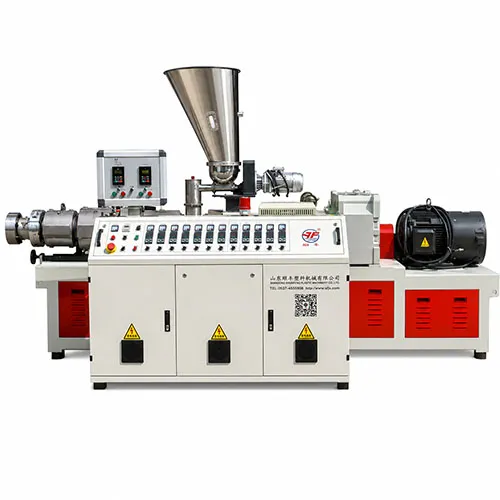
The extrusion process starts when plastic pellets, powder, or granule materials enter the hopper. The screw carries the material forward through different heating zones. As the screw turns, it creates both movement and shear heat. This helps melt the plastic and mix additives, color masterbatch, fillers, or recycled content.
After the plastic becomes molten plastic, it moves toward the metering zone. This zone helps make the flow more stable before the material reaches the die. Good control here matters. Poor melting, uneven temperature, or unstable pressure can cause surface marks, thickness changes, weak edges, and size problems.
A complete extrusion line normally includes feeding, the extruder, die or extrusion head, calibration, cooling, haul-off, cutting, winding, or stacking. The British Plastics Federation explains that profile extrusion is a continuous process that melts plastic raw material and moves it along with heated rotating screws, making it suitable for long products such as pipes and gaskets.
A plastic extruder looks simple from the outside, but every part affects output. The hopper feeds the plastic. The barrel heats the material. The screw moves, melts, and mixes it. The gearbox and motor provide power. The die shapes the final product. The cooling and haul-off units help keep size stable.
The screw is the heart of the extruder. A poor screw can overheat the material, mix badly, or create unstable pressure. A better screw design improves melting, mixing, output, and energy use. For factories working with pvc, polyethylene, polypropylene, polystyrene, acrylonitrile butadiene styrene, or engineering thermoplastic materials, screw structure should match the formula and product.
The die also matters. Dynisco’s extrusion handbook notes that die design should provide the correct extrudate shape, uniform flow rate, and uniform melt temperature across the exit gap. This is important for film, sheet, pipe, and other plastic extrusions where thickness and appearance must stay consistent.
Main components to check before buying:
A single screw extruder uses one screw inside the barrel. It is common, practical, and cost-effective for many stable materials. Single screw machines are often used for simple plastic products, pipe, film, sheet, and pellet production when the material formula is not too complex.
A twin screw extruder uses two screws. It is often better for mixing, compounding, pvc powder, filler-loaded materials, and formulas that need stronger shear and better material distribution. ScienceDirect describes twin screw extruders as machines with two parallel screws that may rotate in the same or opposite directions and may have different intermeshing designs.
For B2B buyers, the question is not “Which one is always better?” The right question is: Which extruder matches my material, product, output, and budget? A single-screw solution may be enough for simple polyethylene pipe. A conical twin screw extruder may be better for PVC profile extrusion. Twin-screw extruders are also useful when processing formulas with powder, fillers, or recycled blends.
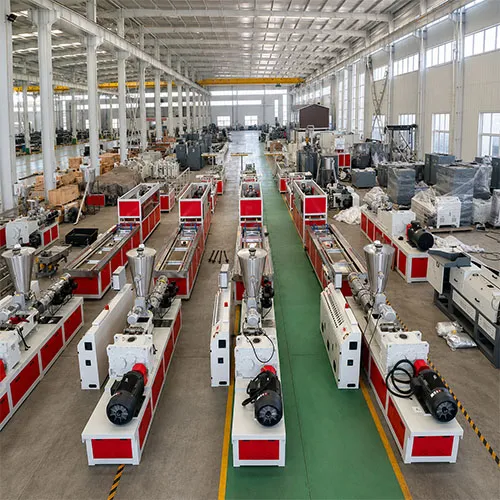
The screw is not just a metal spiral. It controls feeding, compression, melting, mixing, and metering. When the screw is wrong, the extrusion machine may still run, but the product will not be stable. You may see bubbles, black spots, rough surfaces, poor size control, or low output.
The barrel must also resist wear, heat, and corrosion. This is important when processing filler-loaded materials, calcium powder mixtures, glass fiber, recycled plastics, or pvc compounds. For long production runs, a strong screw and barrel system helps reduce downtime and maintenance cost.
In practical factory work, I always suggest checking three things before confirming an extruder: material formula, target output, and expected product quality. A buyer making high-volume pipe needs different screw geometry from a buyer making filled PVC profiles. A medical tubing factory also needs tighter process control than a simple industrial profile workshop.
Film extrusion is widely used for packaging, shopping bags, liners, agricultural film, and industrial wrapping. In blown film extrusion, the melt forms a tube, air expands it into a bubble, and the film is cooled, flattened, and wound. HEE&HATO’s film blowing machine page describes mono-layer and multi-layer systems for HDPE, LDPE, LLDPE, and biodegradable materials, with focus on stable extrusion and thickness control.
Pipe extrusion focuses on diameter, wall thickness, pressure resistance, and roundness. It needs a reliable extrusion head, vacuum calibration, cooling, haul-off, and cutting. For plastic pipes, small thickness changes can affect strength and installation performance. This is why the screw, die, and cooling system must work together.
Profile extrusion is common for construction, furniture, electrical, and industrial parts. PVC window frames are a classic example. HEE&HATO’s application page mentions profile and sheet extrusion for PVC, PP, PC, and PMMA profiles and sheets, with systems such as dosing, vented screws, calibration, haul-off, and in-line gauging.
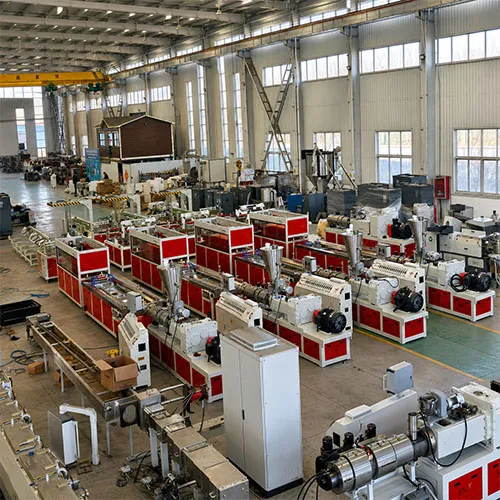
Some buyers search for used plastic extrusion machines, used extrusion equipment, or plastic extrusion machines for sale because they want to reduce upfront cost. This can be reasonable for a small trial project. But for mass production, used extrusion can create hidden risks: worn screws, outdated controls, unstable heating, missing documentation, and hard-to-find spare parts.
Used plastics processing equipment may look cheaper at first. But if it causes poor output, higher scrap, or long downtime, the real cost becomes higher. For factories that supply food packaging, medical products, or industrial precision components, stable production is more important than the lowest purchase price.
A new extrusion line gives clearer configuration, cleaner documentation, training, warranty support, and easier future upgrades. For B2B buyers with long-term plans, a factory-direct machine often gives better value than an unknown used plastic extruder.
HEE&HATO is positioned as a factory-direct supplier of injection molding machines, extrusion lines, film blowing machines, blow molding machines, and screw/barrel systems. Its website highlights one-stop procurement, reliable delivery, and after-sales service for global buyers.
For extrusion projects, HEE&HATO offers the BMT Conical Twin Screw Extruder series. The company describes it as a purpose-built plastic extrusion machine for PVC powder, PP and calcium powder mixtures, and PE wood-plastic pellets. This makes it suitable for building materials, profiles, pipe-related applications, and mixed-material production needs.
For global B2B customers, the value is not only the extruder machine. It is the full support around the line: model selection, auxiliary equipment, installation, commissioning, process training, remote support, maintenance guidance, and customization. HEE&HATO’s service page lists commissioning, process and operation training, remote support, maintenance tips, and customization as part of its one-stop solution.
Why this matters for your factory:
Imagine a factory wants to produce PVC decorative profiles and window frames. The buyer sends product drawings, target output, material formula, and available workshop space. The engineering team reviews screw type, die design, calibration table, haul-off force, cooling length, cutting method, and packing needs.
For this kind of project, the best solution may be a conical twin screw extruder with a profile die, vacuum calibration, haul-off, cutter, and stacking table. If the formula contains calcium powder, the screw and barrel must resist wear. If the product requires a smooth surface, temperature control and die polishing become more important.
A professional extruder machine manufacturer should not only quote the machine. It should also ask about raw materials, power supply, workshop layout, labor skill level, target product sizes, and after-sales expectations. This is the difference between selling machinery and building a stable extrusion solution.
Extrusion and injection molding are both major plastic processing methods, but they solve different problems. Injection molding makes separate parts by injecting molten plastic into a plastic mould. Extrusion makes continuous shapes by pushing molten plastic through a die.
A plastic injection molding machine is ideal for caps, housings, crates, connectors, medical parts, and complex shapes. An extrusion machine is ideal for pipe, film, sheet, tubing, and continuous profiles. Many factories use both processes in the same business because product demand is often mixed.
The first mistake is buying by price only. A low extrusion machine price may hide weak gearbox quality, poor screw material, low automation, or limited service support. The second mistake is ignoring downstream equipment. A strong extruder with a poor cooling or haul-off system still creates bad products.
The third mistake is giving the supplier unclear requirements. “I need an extrusion machine” is too broad. A better request is: “I need a PVC profile extrusion line for window frames, using this formula, with this output, this product drawing, and this power standard.” Clear data helps the supplier quote faster and design better.
The fourth mistake is forgetting operator training. Even good extrusion equipment needs skilled setup. Temperature, screw speed, haul-off speed, cooling, die adjustment, and material drying must work together. Training helps your factory reach stable output faster.
A good extrusion machine should help your factory run every day, not just look good in a catalog. For B2B buyers, the real value comes from stable output, lower scrap, clear documentation, responsive engineering, and long-term parts support.
When you compare suppliers, ask for more than a price. Ask for configuration details, screw design logic, applicable materials, output range, machine drawings, delivery milestones, installation plan, and after-sales response. A reliable plastic extrusion machine supplier should answer these questions clearly.
For manufacturers planning plastic extrusions, film extrusion, pipe extrusion, sheet extrusion, or custom plastic extrusion, HEE&HATO can be positioned as a factory-direct, engineering-driven partner for one-stop plastic machinery solutions.
An extrusion machine is used to melt and shape plastic into continuous products. Common examples include pipe, plastic tubing, plastic sheet, plastic film, plastic profile, cable duct, and window frames. The extruder pushes molten plastic through a die, and the downstream system cools, pulls, cuts, or winds the final product.
An extruder is the main machine that melts and pushes plastic. An extrusion line includes the extruder plus the die, cooling system, calibration table, haul-off, cutter, winder, stacker, and control system. For mass production, buyers usually need a full extrusion line, not only the plastic extruder.
A single screw extruder is enough for many simple materials and products, such as PE or PP pipe, sheet, and some film applications. But for PVC powder, filled compounds, WPC, or stronger mixing needs, a twin screw extruder may be better. The best choice depends on your material and product.
Extrusion machine price depends on screw diameter, output, motor power, screw/barrel material, die design, automation level, downstream equipment, electrical brand, safety configuration, and after-sales service. A complete line costs more than a basic extruder, but it gives better production readiness.
One machine can sometimes make different products if the material range and output are similar, but you may need different dies and downstream systems. For example, pipe, sheet, and profile extrusion need different line designs. It is better to tell the supplier your full product plan before ordering.
Send your product drawing, material formula, output target, product size range, power standard, factory layout, automation needs, and photos or samples if available. Clear information helps the supplier choose the right screw, extrusion equipment, die, and downstream configuration.
The screw controls feeding, melting, mixing, compression, and output stability. Poor screw design can cause unstable pressure, weak melting, black spots, and high waste. A good screw and barrel system improves plasticizing quality and helps the extrusion machine run more smoothly.
Used extrusion equipment may suit a small trial budget, but it can bring risks such as worn screws, poor controls, missing spare parts, and unstable output. For food packaging, medical, and precision industrial production, a new factory-direct extrusion line is usually safer for long-term operation.

A hydraulic injection molding machine generates clamping and injection force through press…

Set injection moulding process parameters in a fixed order: barrel and mould temperature, …
We will reply you within 24 hours. If for urgent case, please add WhatsApp/WeChat: +86 15653430206,. Or call +86 15653430206 directly.
*We respect your confidentiality and all information are protected.
We will only use your information to respond to your inquiry and will never send unsolicited emails or promotional messages.