

Máquina de moldagem por injeção hidráulica vs. máquina totalmente elétrica: uma explicação
Uma máquina de moldagem por injeção hidráulica gera a força de fecho e a força de injeção através de uma prensa…
22 de agosto de 2026
 2026-04-17-09:35
 Quando a qualidade dos pellets é irregular, as linhas param, os materiais aglomeram-se e o manuseamento da água aumenta os custos, o que faz com que a produção se torne rapidamente caótica. O peletizador de fios arrefecido a ar adequado resolve esse problema, proporcionando-lhe uma forma mais limpa, simples e estável de transformar o material fundido em pellets utilizáveis.
Um peletizador de fios com arrefecimento a ar é uma solução de peletização de fios que arrefece e corta fios de plástico extrudidos em pellets sem depender de um percurso completo de arrefecimento a água tradicional para cada material. Para reciclagem e composição, oferece um fluxo de processo limpo, opções de modelos flexíveis e uma produção estável de pellets para materiais como LDPE, HDPE, PVC, ABS, TPU e PLA.
Um peletizador de fios é utilizado a jusante da extrusora. O material fundido sai da cabeça de extrusão sob a forma de longos fios de plástico, passa por um processo de arrefecimento e transporte e, em seguida, entra na secção de corte para a produção de pellets. O objetivo é simples: transformar material quente e maleável em pellets uniformes, mais fáceis de embalar, transportar, alimentar e reutilizar em etapas posteriores do processamento do plástico. A Coperion descreve a peletização em fios como a conversão de fios de polímero fundido em pellets secos e fáceis de manusear, e essa descrição adequa-se bem a este produto.
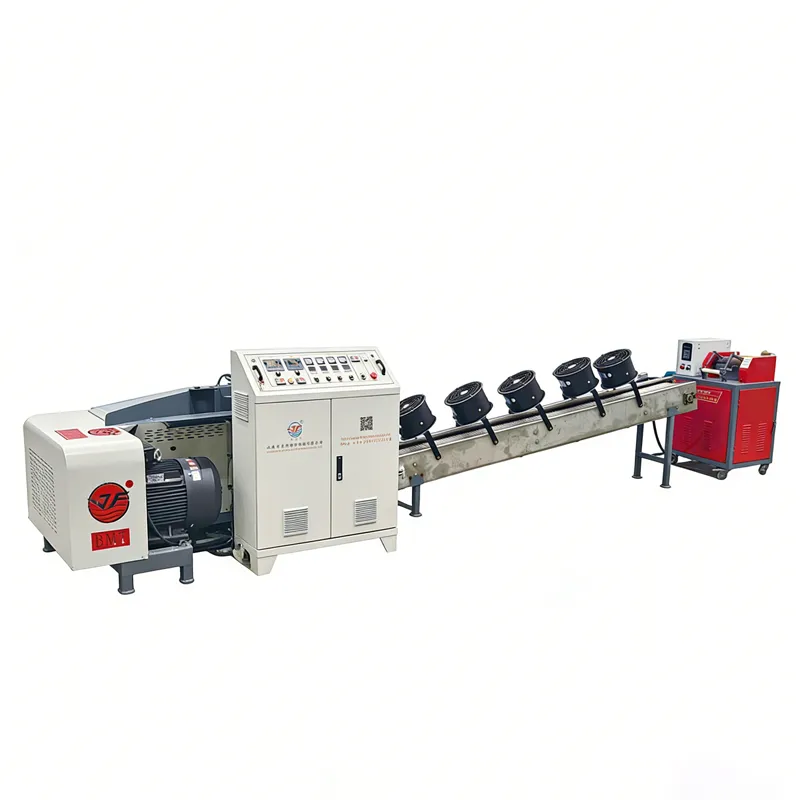
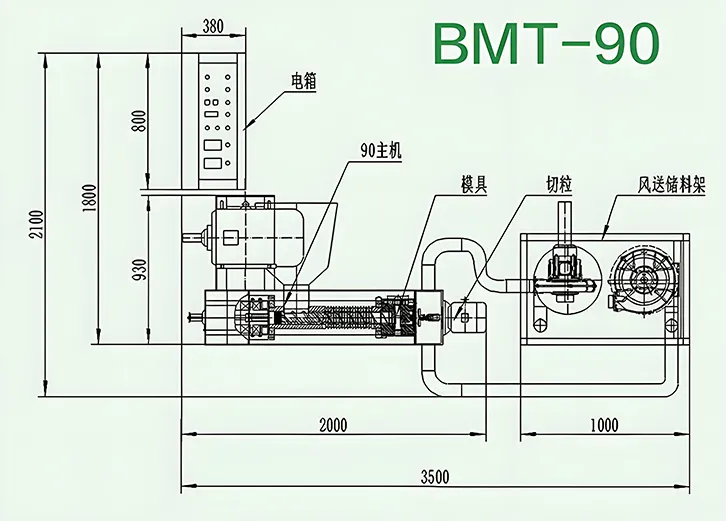
A HEE&HATO Peletizador de fios arrefecido a ar É apresentado como um sistema de peletização limpo e eficiente para reciclagem e produção de compostos. A página do produto indica que é compatível com LDPE, HDPE, CPE, PVC, TPO, PLO, TPU, ABS, PLA e outros plásticos biodegradáveis, com opções de modelos que vão do BMT-90 ao BMT-150. Isto torna-o um peletizador de fios prático para fábricas que utilizam diferentes fórmulas e precisam de margem para aumentar a produção ao longo do tempo.
Do nosso ponto de vista, enquanto fornecedor direto da fábrica e orientado para a engenharia, o valor não reside apenas no corte de um pellet. Reside na construção de uma linha de peletização que permita a elaboração rápida de orçamentos, uma produção em massa estável, apoio ao processo e um serviço pós-venda a longo prazo para fabricantes B2B globais e projetos de modernização de linhas de produção.
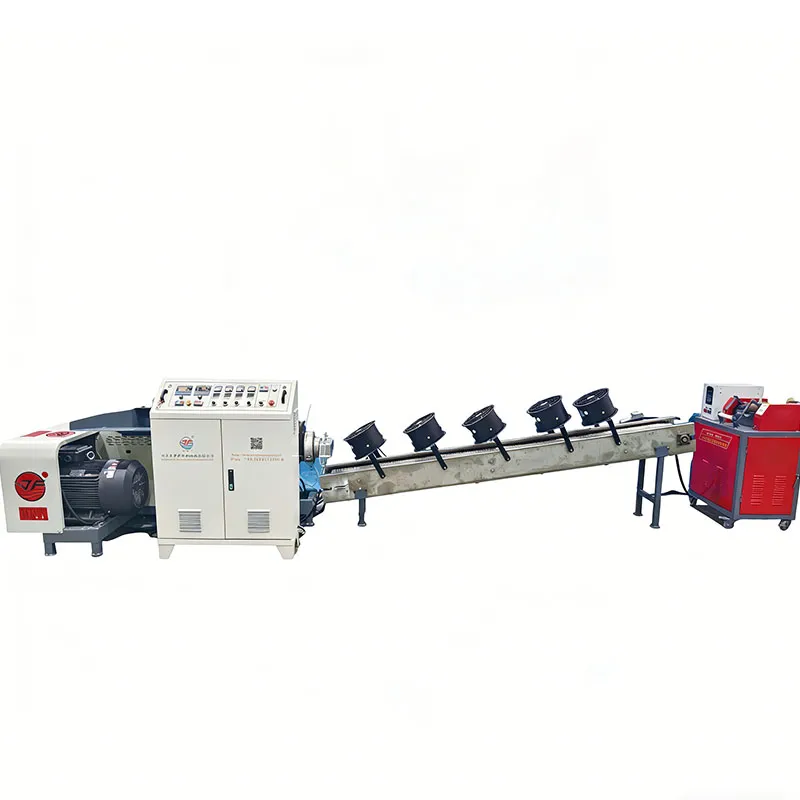
A principal razão é a simplicidade do processo. Em muitas fábricas, o arrefecimento a ar reduz o manuseamento de água, diminui o trabalho de limpeza e mantém a área operacional mais limpa. Isso é importante na produção real. Ao diminuir a dependência do tratamento de água, da manutenção de reservatórios e dos pontos de transferência húmidos, muitas vezes também se reduzem os problemas diários. A HEE&HATO apresenta especificamente esta máquina como uma solução limpa e eficiente, o que constitui uma das razões pelas quais o produto se destaca para utilização prática em fábrica.
Isso não significa que o arrefecimento tradicional a água seja sempre inadequado. Significa simplesmente que a melhor opção de arrefecimento depende da resina e do fluxo do processo. A HEE&HATO refere que, para PE, PVC, PLA, ABS e TPU, a configuração utiliza a peletização por fio com arrefecimento a ar, com uma extrusora, um cortador aquecido e um painel de controlo, enquanto que, para PP e PET, a secção de corte passa a ser de corte a água, conforme necessário. Este é um lembrete útil: a peletização inteligente consiste em adaptar o método ao material, e não em impor um único método a todos os trabalhos.
Por que razão muitos compradores preferem os sistemas refrigerados a ar
A HEE&HATO enumera: LDPE, HDPE, CPE, PVC, TPO, PLO, TPU, ABS, PLA e outros materiais biodegradáveis. Esta variedade é importante porque os transformadores raramente utilizam apenas uma formulação para sempre. Um bom granulador de plástico deve ser capaz de processar tanto compostos de uso corrente como fórmulas mais especializadas utilizadas em materiais modificados, masterbatches e misturas degradáveis.
Isto é ainda mais importante na composição moderna. Os bioplásticos e as linhas de composição exigem um alinhamento cuidadoso entre as etapas de alimentação, extrusão, peletização e secagem, uma vez que o comportamento do material pode variar consideravelmente. Em termos simples, quanto mais diversificada se tornar a sua mistura de polímeros, mais valioso se torna um sistema de peletização de fio estável. Isto é especialmente verdadeiro para as fábricas que produzem misturas para embalagens, peças industriais e programas de materiais circulares.
Para os compradores de embalagens alimentares, embalagens de apoio médico e componentes industriais de precisão, a flexibilidade multimaterial é mais do que um simples extra. É, muitas vezes, a diferença entre uma máquina destinada a um único projeto e uma plataforma a longo prazo. Essa necessidade B2B é exatamente o tipo de necessidade descrita no seu briefing: um rendimento estável hoje, tendo em conta a personalização orientada pela engenharia e a expansão futura.
Um peletizador de fio nunca é apenas um cortador. A extrusora, a matriz de fio, o percurso de transporte, a configuração do soprador e a secção das lâminas funcionam como um único sistema. Nesta máquina, os diâmetros dos parafusos, as dimensões dos inversores, os motores de corte e as configurações dos ventiladores indicados mostram-nos que a qualidade dos pellets depende do equilíbrio global da máquina, e não de um único componente. A HEE&HATO salienta ainda que, para muitos materiais, a configuração do sistema inclui a extrusora, o cortador aquecido e o painel de controlo como um pacote integrado.
Na produção quotidiana, várias pequenas variáveis são importantes: a velocidade da lâmina, a estabilidade da alimentação, o estado dos fios e a limpeza com que o material fundido sai da cabeça de extrusão. Se o plástico fundido estiver instável, se os fios colarem e formarem aglomerados, ou se a configuração do cortador estiver incorreta, o tamanho e o comprimento finais dos pellets sofrerão variações. Uma boa qualidade estável dos pellets resulta de um processo equilibrado, e não de um slogan de marketing. A Coperion salienta também que o design do peletizador, especialmente a câmara de corte e as funcionalidades de ajuste, tem um efeito direto na qualidade e no manuseamento do produto.
Pontos-chave de controlo de qualidade
Esta é uma das perguntas mais frequentes dos compradores. A resposta sincera é que nenhum dos sistemas vence todos os projetos. A peletização subaquática e os peletizadores subaquáticos são amplamente utilizados para termoplásticos de alto rendimento e em algumas condições de processo exigentes. A gama oficial de peletizadores da Coperion demonstra que os sistemas subaquáticos, os sistemas de anel de água e os peletizadores de fio existem porque materiais e objetivos operacionais diferentes requerem soluções diferentes.
Um peletizadora de fios com arrefecimento a ar é frequentemente uma opção atraente quando os compradores procuram uma configuração mais simples, uma manutenção mais fácil e um percurso mais limpo para os materiais selecionados. Um peletizador de face ou um sistema subaquático podem ser mais adequados para outras formas de produto, rendimentos muito elevados ou comportamentos dos materiais que respondem melhor ao corte a quente ou submerso. O essencial não é perguntar qual o método que parece mais avançado. A melhor pergunta é: qual o equipamento de peletização que melhor se adequa à sua resina, à sua capacidade de produção, à sua equipa de manutenção e à qualidade de peletes pretendida?
Porque a reciclagem e a composição raramente são processos simples. A qualidade das matérias-primas varia. As formulações variam. O rendimento varia. Um sistema de peletização por ar de refrigeração útil tem de continuar a funcionar apesar dessa realidade. A HEE&HATO posiciona explicitamente este produto para várias necessidades de reciclagem e composição, e não apenas para uma fórmula específica. Isso é importante para os transformadores que fabricam compostos à base de material triturado, misturas para embalagens ou masterbatches especiais.
Em muitos casos, é precisamente uma extrusora de duplo parafuso adequadamente selecionada — ou outra extrusora a montante — e uma fase de peletização fiável a jusante que transformam resíduos ou material misto novamente em pellets comerciais utilizáveis. Para uma reciclagem eficiente, o manuseamento estável dos pellets não é uma questão secundária. É o ponto principal.
Para os compradores B2B a nível global, isto é importante do ponto de vista comercial. Se uma linha de produção permitir a reutilização eficiente do plástico, um rendimento estável e prazos de entrega previsíveis, torna-se mais fácil obter a aprovação dos clientes e expandir a produção. Isto está em perfeita sintonia com as expectativas dos compradores indicadas no seu briefing: produção em massa estável e comprovada, resposta rápida às soluções, entregas em conformidade e apoio técnico a longo prazo.
Começaria por fazer seis perguntas. Que tipo de material está a processar? Qual é o rendimento de que realmente necessita? O arrefecimento a ar é adequado para o seu trabalho, ou necessita de arrefecimento a água numa parte da linha? Quão sensível é o seu material ao calor e à aderência? Qual é a especificação dos pellets mais importante? E qual é o nível de competência da sua equipa de manutenção?
Em seguida, passaria à lista de verificação do equipamento:
Um bom fornecedor também deve discutir como o fluxo do processo se encaixa no conjunto da planta, não apenas na máquina sozinha. Isso inclui utilidades, layout, formação de operadores e a passagem da seção de extrusão a montante para a etapa de embalagem a jusante.
Eles afetam tudo. O serviço da HEE&HATO destaca comissionamento, treinamento de processos e operações, suporte remoto, dicas de manutenção e personalização. Também afirma que o comissionamento inclui calibração mecânica e elétrica, alinhamento, verificações de I/O, depuração do controle de temperatura, refrigeração, transporte e monitoramento online, com aceitação com base em 72 horas de operação contínua e estável. Esse é um forte sinal para compradores que se preocupam com a verdadeira prontidão inicial, não apenas com o envio.
Pela experiência, a melhor linha de peletização não é aquela que apenas funciona bem durante uma demonstração de vendas. É aquela que pode continuar funcionando após a instalação, treinamento e a primeira onda de mudanças de receita. É por isso que as peças de reposição, suporte remoto e programas de manutenção são tão importantes. Em projetos de atualização de linha, o suporte de tempo de operação é frequentemente o que separa um preço baixo de um bom investimento.
Se a sua planta trabalha com LDPE, HDPE, PVC, ABS, TPU, PLA ou materiais similares e você deseja uma rota de peletização de cordão mais limpa com opções de capacidade flexível, esta máquina é uma forte candidata. Se você também valoriza o suporte do fornecedor em comissionamento, treinamento e serviço durante o ciclo de vida, a adequação torna-se ainda mais forte. A página inicial e as páginas de serviços da HEE&HATO apresentam claramente a empresa como um fornecedor completo em moldagem por injeção, sopro de filme, peletização, rosca e cilindro, e serviços relacionados.
Se o seu processo está fortemente centrado em PP ou PET e precisa de uma rota de corte diferente, a página do produto já sinaliza que mudanças de configuração podem ser necessárias. Essa honestidade é útil. Mostra que a linha deve ser selecionada com base no comportamento real do plástico e nas necessidades de produção, não em uma conversa de vendas genérica. Em projetos B2B, esse tipo de lógica de engenharia geralmente leva a melhores resultados a longo prazo.
Imagine um processador de médio porte que produz compostos reciclados para embalagem e peças industriais. A linha antiga sofre com manuseio úmido, forma de pelotas inconsistente e alto tempo de limpeza. O proprietário deseja um sistema melhor, mas a equipe de produção também precisa de operação fácil e treinamento confiável.
Nesse caso, um peletizadora de fios com arrefecimento a ar pode ser atraente porque simplifica a linha, suporta múltiplos materiais e oferece opções de modelos que se ajustam tanto à demanda atual quanto à expansão futura. Quando essa máquina é respaldada por comissionamento, treinamento de operadores e serviço a longo prazo, a compra se torna mais do que uma simples troca de hardware. Torna-se uma atualização de produção.
O principal benefício é uma rota de peletização mais limpa e simples para materiais selecionados. Pode reduzir o manuseio relacionado à água, apoiar a produção constante de pelotas e se encaixar em muitos trabalhos de reciclagem e composição.
De acordo com a página oficial, ele pode lidar com LDPE, HDPE, CPE, PVC, TPO, PLO, TPU, ABS, PLA e outros plásticos biodegradáveis.
Não. O melhor método depende do material e do processo. A HEE&HATO observa que alguns materiais usam a configuração refrigerada a ar, enquanto PP e PET podem exigir corte a água.
Porque o comissionamento, o treinamento, o suporte remoto e as peças de reposição afetam diretamente o tempo de operação, o rendimento e a rapidez com que sua equipe alcança a produção estável após a instalação. A HEE&HATO inclui explicitamente esses serviços em seu modelo de suporte.
Sim, essa é uma de suas forças práticas. A linha com quatro modelos dá aos compradores espaço para começar com a capacidade certa e avançar para demandas de produção maiores mais tarde. Essa escalabilidade também se encaixa no perfil de comprador no seu resumo.

Uma máquina de moldagem por injeção hidráulica gera a força de fecho e a força de injeção através de uma prensa…

Defina os parâmetros do processo de moldagem por injeção numa ordem fixa: temperatura do cilindro e do molde, …
Responder-lhe-emos no prazo de 24 horas. Se for um caso urgente, adicione WhatsApp/WeChat: +86 15653430206,. Ou ligue diretamente para +86 15653430206.
*Respeitamos a sua confidencialidade e todas as informações são protegidas.
Apenas utilizaremos as suas informações para responder ao seu pedido e nunca enviaremos mensagens de correio eletrónico ou mensagens promocionais não solicitadas.