Vous rencontrez des problèmes de qualité de granulat incohérente, de taux d'humidité élevé ou de production de granulation instable ? Ces problèmes peuvent réduire l'efficacité et augmenter les coûts. Un système de granulateur à anneau d'eau bien conçu résout ces problèmes avec une granulation stable, une coupe précise et un refroidissement efficace, garantissant une production de haute qualité et fiable.
Un granulateur à anneau d'eau est un système de granulation haute efficacité qui convertit le plastique fondu en granulés uniformes à l'aide d'une tête de coupe à face de filière et d'un refroidissement par eau circulante. Il est largement utilisé pour les matériaux PE, HDPE, LDPE et biodégradables, offrant un débit stable, un faible taux d'humidité et une excellente qualité de granulat pour les lignes modernes de traitement et de recyclage du plastique.
Qu'est-ce qu'un granulateur à anneau d'eau et comment fonctionne-t-il ?
Un granulateur à anneau d'eau est un type de machine de granulation utilisée dans le traitement du plastique pour convertir le polymère fondu en granulés uniformes. Il est largement appliqué dans la granulation des plastiques, en particulier pour les matériaux thermoplastiques tels que le PE, le HDPE et le LDPE.
Dans un système typique granulateur à anneau d'eau le matériau fondu sort de l’extrudeuse par une plaque de filière. Un coupeur à face de filière haute vitesse découpe le matériau en petits granulés, qui sont immédiatement refroidis par de l'eau circulante.
Le processus clé implique :
- L’extrusion de plastique fondu
- La coupe au niveau de la filière
- Le refroidissement par granulation à anneau d'eau
- Le déshydratation et le séchage
Cette méthode garantit une formation de granulat uniforme, un faible taux d'humidité et une performance de granulation stable.
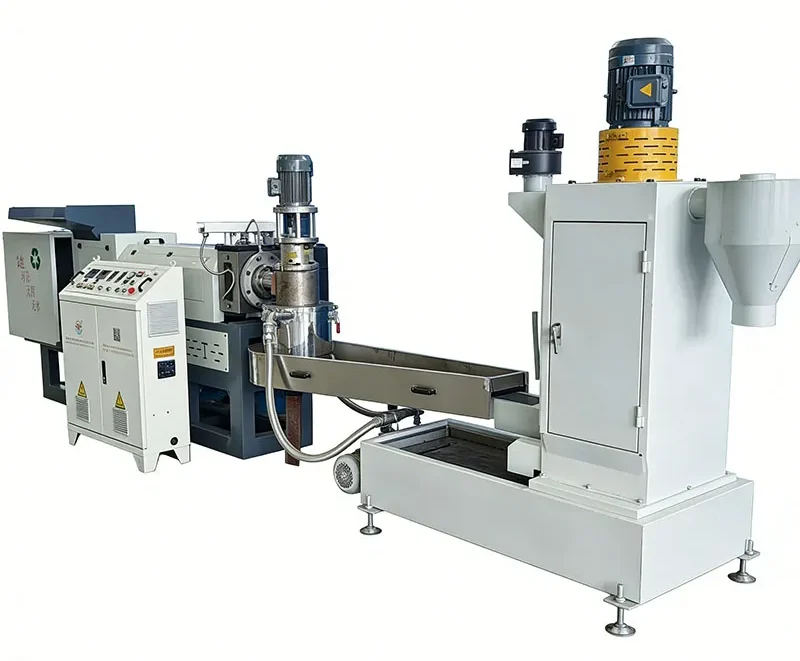
Quelles sont les caractéristiques et les avantages clés des granulateurs à anneau d'eau ?
Lorsque vous sélectionnez un granulateur à anneau d'eau, comprendre ses caractéristiques et ses avantages est essentiel.
Avantages clés
- Granulation stable pour une production cohérente
- Coupe et refroidissement haute efficacité
- Faibles coûts d'exploitation et de maintenance
- Processus de coupe à la face de filière précis
- Excellente maîtrise de la température de l'eau
Points forts de performance
- Produit une taille de granulat uniforme
- Réduit la dégradation des matériaux
- Soutient les besoins de production à haut débit
- Assure une gestion cohérente de la qualité des granulés
D'après mon expérience de travail avec des acheteurs B2B dans le monde entier, ces facteurs sont souvent décisifs lors de la mise à niveau d'une ligne de granulation.
Quels matériaux peuvent être traités dans la granulation à anneau d'eau ?
Un granulateur à anneau d'eau est très polyvalent et prend en charge presque tous les thermoplastiques.
Matériaux courants
- PE (polyéthylène)
- HDPE et LDPE
- PVC et ABS
- TPU et TPO
- PLA (polymère biodégradable)
Il est également largement utilisé dans :
- La production de masterbatch
- Le processus de recyclage du plastique
- Des matériaux à haute viscosité
Cette flexibilité en fait un choix privilégié pour les lignes industrielles de traitement des plastiques.
Granulateur à anneau d'eau vs Granulation par fil : Lequel est le meilleur ?
Les deux systèmes ont leur place, mais le système de granulateur à anneau d'eau est généralement meilleur pour la production automatisée.
Aperçus de comparaison
- La granulation à anneau d'eau est idéale pour une opération continue
- La granulation par fil convient à la production à petite échelle
Si votre objectif est :
- Un fort rendement
- Une granulation stable
- Faible teneur en humidité
Alors un granulateur à anneau d'eau est la meilleure option.
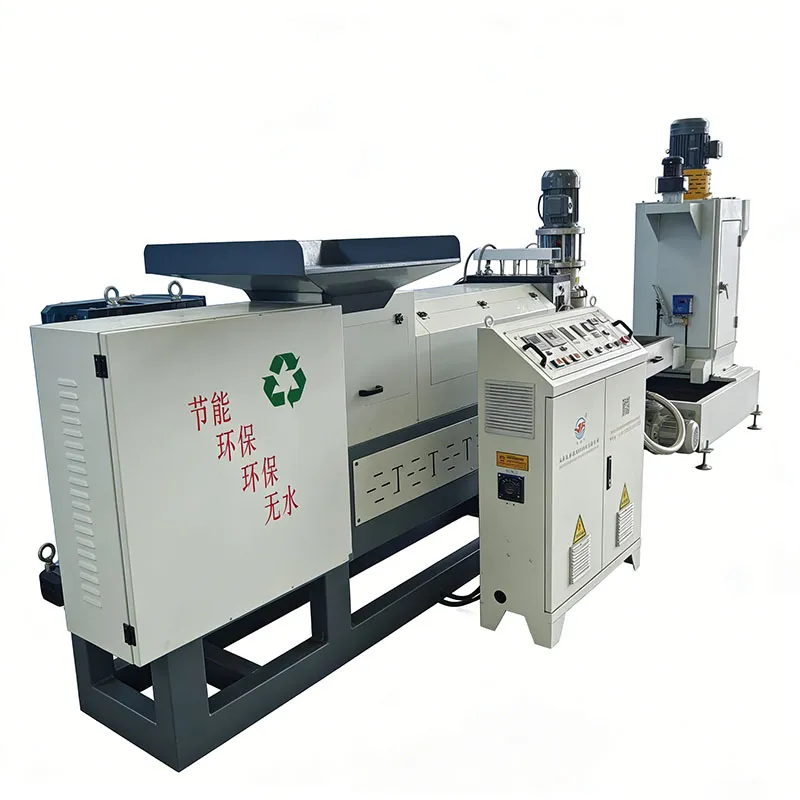
Comment choisir la bonne machine à pelletiser pour votre ligne de production ?
Choisir le bon système de pelletisation dépend de vos besoins de production.
Facteurs clés
- Débit requis
- Type de matières premières plastiques
- Taille et forme de granulés souhaitées
- Niveau d'automatisation
- Budget et faible coût d'exploitation
Par exemple :
- Extrudeuse à vis unique → matériaux simples
- Extrudeuse à double vis → formulations complexes
Une solution de pelletisation bien adaptée peut réduire considérablement les coûts des matières premières et améliorer l'efficacité.
Comment optimiser le débit et la qualité des granulés dans la production de granulés ?
Optimiser votre ligne de production de granulés nécessite une attention particulière aux détails.
Conseils d'optimisation
- Maintenir une température de l'eau stable
- Utiliser des systèmes de changement de tamis appropriés
- Assurer un processus de coupe cohérent
- Surveiller la teneur en humidité
- Passer à un système de circulation d'eau avancé
Ces étapes peuvent améliorer :
- Efficacité améliorée
- Meilleure qualité de granulés
- Moins de temps d'arrêt
FAQ
Quelle est la différence entre un pelletiseur à anneau d'eau et un pelletiseur à cordon ?
A granulateur à anneau d'eau utilise la coupe du visage de matrice et le refroidissement à l'eau, tandis que la pelletisation en cordon repose sur le refroidissement des cordons avant la coupe. Les systèmes à anneau d'eau offrent une efficacité supérieure et une meilleure uniformité des granulés.
Un pelletiseur à anneau d'eau peut-il traiter des plastiques biodégradables comme le PLA ?
Oui, il est adapté au PLA et à d'autres matériaux biodégradables grâce à son processus de coupe et de refroidissement précis à température contrôlée.
Quelle est la teneur en humidité typique après la pelletisation ?
Avec un déshydratation et un séchage appropriés, la teneur en humidité est très faible, rendant les granulés adaptés à une réutilisation directe.
Une extrudeuse à double vis est-elle nécessaire pour la pelletisation ?
Pas toujours. Une extrudeuse à double vis est préférée pour le compoundage, tandis qu'une extrudeuse à vis unique fonctionne pour les matériaux standards.
Comment la circulation de l'eau affecte-t-elle la qualité des granulés ?
Un système de circulation d'eau stable assure un refroidissement cohérent, évitant la déformation et améliorant l'uniformité des granulés.
Quelles industries profitent le plus de la pelletisation à anneau d'eau ?
Les industries telles que l'emballage, le recyclage, les plastiques médicaux et la fabrication industrielle en bénéficient le plus.


 2026-04-10-13:50
