










Hydraulic Injection Molding Machine vs All-Electric Explained
A hydraulic injection molding machine generates clamping and injection force through press…
August 22 2026
 2026-04-17-09:16
 Slow output, unstable bottle quality, and unclear delivery support can turn a good packaging project into a daily headache. If your line needs faster bottle production with less guesswork, a rotary blow moulding machine built for stable mass production can solve that problem fast.
The SQ-100~1000ML 8-station rotary blow moulding machine is a fully automatic blow molding machine for small hollow plastic bottles under 1 liter. It is designed for single-layer to 1–6 layer production, supports 1000–2000 pcs/hr theoretical output, and suits pesticide, fruit milk, medical, and chemical bottle blow applications.
This blow molding machine is built for manufacturers that need fast, repeatable bottle production for small hollow products. The SQ-100~1000ML model is an 8-station rotary blow moulding machine with 1 die head, maximum product volume of 1000 mL, theoretical output of 1000–2000 pieces per hour, and fully automatic neck cutting. HEE&HATO positions it as a practical upgrade from traditional rotary blow molding machine setups for users who want faster throughput and more stable daily output.
In plain terms, this is not hobby machinery. It fits mid- to large-scale B2B processors that care about verified stable mass production, quick quoting, export-compliant delivery, and long-term after-sales support. That matches the broader HEE&HATO model as a factory-direct supplier of injection molding, extrusion, film blowing, and blow molding equipment with commissioning, training, remote support, and customization.
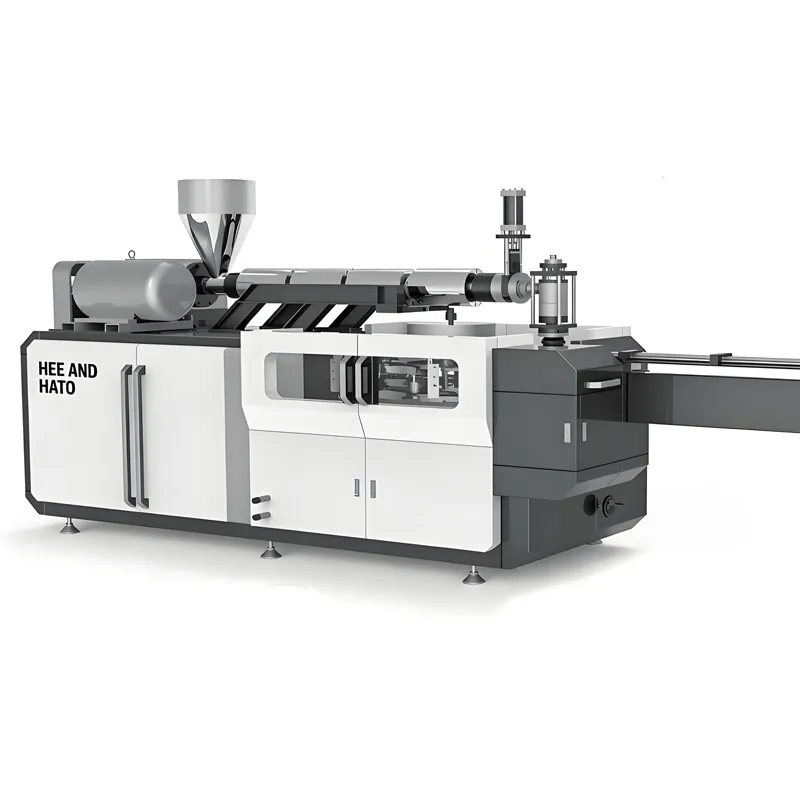
A rotary machine matters because speed is never just about motor power. It is about how smoothly the bottle machine moves through each blow station, how repeatably the blow mold closes, and how steadily the process holds temperature, air pressure, and trimming rhythm. On this machine, the value comes from an 8-station layout that keeps the cycle moving for high-speed bottle blow work instead of waiting through long stop-start motion.
For owners and project managers, the real benefit is business stability. Faster rotary blow molding does not only mean more bottles per shift. It can also mean better planning for labor, packing, secondary printing, filling, and shipment. In our experience, buyers who upgrade from slower legacy equipment usually care less about headline speed and more about predictable bottle quality, easier scaling, and cleaner production milestones from FAT to commissioning to training. HEE&HATO’s service model is built around that day-1 stability mindset.
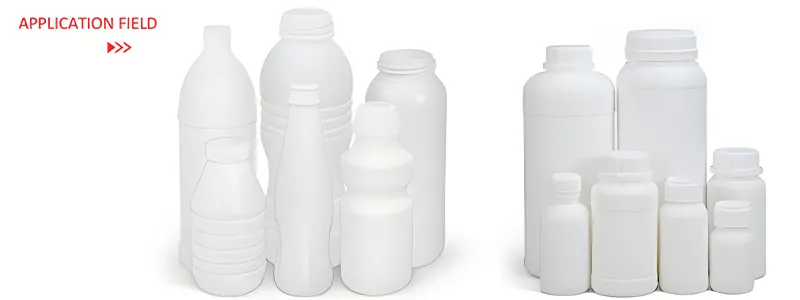
This bottle blow molding machine is positioned for bottles below 1 liter, especially pesticide bottles, fruit milk bottles, medical bottles, and chemical bottles. That already tells you a lot about its sweet spot: small container programs that need stable repeat production, neat neck finishing, and room for single-layer or 1–6 layer structure.
That application range also matches the kind of global B2B customer described in your brief: packaging manufacturers, medical packaging suppliers, industrial component producers, and EPC or system-integration teams that want one-stop delivery and lifecycle support. If your plant makes daily-use chemical containers, light dairy packaging, or small technical bottles, this blow molding machine designed for continuous bottle production will usually be more relevant than a stretch blow molding machine designed around PET preforms.
Many buyers search broad terms before they narrow the machine list. They may compare this equipment with an injection blow molding machine, a stretch blow molding machine, a linear blow molding machine, or even an automatic PET bottle blowing machine. That comparison is normal, but the processes solve different problems. Extrusion blow molding uses a parison. Injection blow molding combines injection molding and blowing, often for smaller high-precision containers. Stretch blow molding is widely used for lightweight PET bottle production where clarity and strength are critical.
For this reason, buyers should not mix every search term into one shortlist. A pet blow molding machine, orientation stretch blow molding machine, or one-stage biaxial orientation stretch blow system belongs to a different production logic from a wheel-type extrusion blow machine. If your project is based on PET preform injection molding, heating and blowing, and a final high pressure blowing air step for clear beverage bottles, you are in a different process family. If your goal is flexible small hollow products for chemical, medical, or dairy packs, this rotary plastic blow moulding approach is often the stronger fit.
The first thing to check is whether the blow mold strategy matches the commercial reality of your orders. Ask about cavity layout, neck finish repeatability, trimming stability, changeover time for different blow sizes, and how the blow mold will support daily cleaning and maintenance. When a supplier talks only about the blowing machine and ignores the blow mold, that is a warning sign. The mold is where bottle quality is won or lost. A poor cavity balance can erase the value of an otherwise good blow molder.
The second thing is control and automation. This model includes automatic neck cutting and offers an optional electric parison controller. That matters because small bottles live or die on repeatability. In practical sourcing terms, buyers should ask for output data, sample consistency, and continuous-run evidence rather than just brochure language. If a supplier says the blow molding machine is fully stable, ask what that means in numbers: scrap rate, uptime, bottle weight tolerance, and stable run duration. HEE&HATO states that its acceptance basis during commissioning is 72 hours of continuous and stable operation, which is a useful benchmark mindset.
Buyer Checklist Before You Order
Machine buying does not end at payment. It starts there. HEE&HATO’s process and operations training, remote support, maintenance tips, and customization. It also states that commissioning includes mechanical and electrical calibration, I/O checks, baseline energy and cycle-time recording, and acceptance based on 72 hours of continuous and stable operation. For serious packaging plants, that is exactly the type of lifecycle support that lowers startup risk.
That support model fits the needs of global B2B converters that want clear milestones: FAT, export documents, installation, commissioning, and training. In my view, this is where an engineering-driven supplier stands out from a simple trading offer. Good blow molding machinery is not just steel and control panels. It is also response speed, remote diagnostics, spare parts planning, and the ability to keep your bottle production line moving after shipment.
If your factory is focused on small hollow plastic products below 1 liter, needs a rotary blow molding machine instead of a slower standalone blow molder, and wants 1–6 layer flexibility, this machine makes a lot of sense. It is especially relevant for processors serving chemical, food-adjacent, medical, and daily-use packaging markets where reliable bottle production matters more than flashy machine language. The combination of 8 stations, automatic neck cutting, and optional electric parison control is a practical package for real factory work.
If your program is PET bottle blow only, driven by pet preform sourcing, pet bottle blow speed, and a stretch blow route, then you may need a different system. But if you want a bottle blow molding machine for non-PET or flexible multi-layer small containers, backed by a supplier that also understands injection molding, extrusion, film blowing, and lifecycle service, this is a strong candidate for expansion. HEE&HATO presents itself as exactly that kind of one-stop plastic machinery supplier.
A regional packaging converter wants to replace an older semi-automatic blow molding setup that struggles with output and trimming consistency. The plant serves pesticide and chemical bottles in small volumes, and the maintenance team is tired of chasing unstable bottle quality every week.
In that situation, a new 8-station rotary blow moulding machine can solve several problems at once: faster bottle blow output, cleaner neck finishing, easier planning for blow mold maintenance, and a clearer service path after delivery. The biggest gain is not just speed. It is confidence. When owners know the machine, the blow mold, the training plan, and the spare parts path from the start, expansion decisions become easier.
The main advantage is fast, stable production of bottles below 1 liter. The 8-station rotary layout supports higher throughput, while automatic neck cutting and optional parison control help improve repeatability and bottle quality.
Not as a standard answer for classic PET preform-based beverage production. PET bottle projects often use stretch blow molding machine systems based on reheated or one-stage preforms. This SQ model is positioned for small hollow products like pesticide, medical, fruit milk, and chemical bottles.
Yes. The official product page states that the machine supports single-layer and 1–6 layer production, which gives more flexibility for specialized bottle programs.
Ask for sample bottles, blow mold recommendations, utility requirements, stable-run data, FAT details, commissioning scope, training content, spare parts list, and delivery milestones. Those points matter as much as the machine itself.
Yes. Commissioning, operator training, remote diagnostics, and maintenance guidance directly affect uptime and yield. HEE&HATO explicitly promotes those services, including acceptance around 72 hours of stable operation.

A hydraulic injection molding machine generates clamping and injection force through press…

Set injection moulding process parameters in a fixed order: barrel and mould temperature, …
We will reply you within 24 hours. If for urgent case, please add WhatsApp/WeChat: +86 15653430206,. Or call +86 15653430206 directly.
*We respect your confidentiality and all information are protected.
We will only use your information to respond to your inquiry and will never send unsolicited emails or promotional messages.